In a nutshell
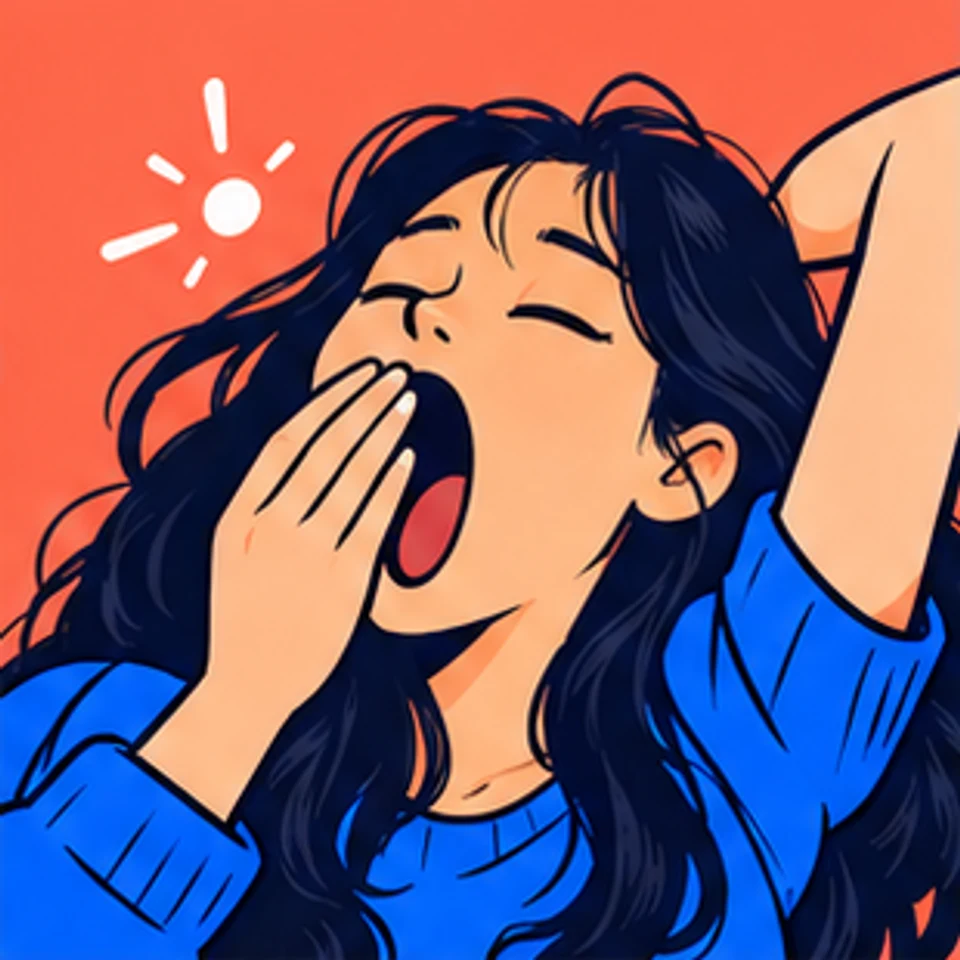
Yawning combines a wide mouth opening with a deep inhalation and brief stretch. It often occurs with tiredness or during transitions between states of activity.
Why does it happen?
Several brain regions coordinate the breathing, facial, and jaw muscles involved. Neurotransmitters and the sleep–wake state affect how easily a yawn is triggered. Its primary biological function is not conclusively known; oxygen shortage is not an adequately supported general explanation.
Frequency
Yawning is normal and widespread behavior. The number of episodes depends, among other things, on tiredness and transitions between states of activity.
Frequency is a qualitative description, not your individual probability.
Is it normal?
Occasional yawning is normal.
When to seek advice
A marked new increase together with significant daytime sleepiness or after medication changes should be discussed with a clinician.
Does this happen to you?
Your answer is first saved only on this device.
How others answer
Loading results …
No shared answers yet.
Voluntary responses, not representative. One answer per saved browser key and article is counted. Multiple submissions are possible; people are not verified.
Sources (1)
- Yawning in neurology: a review (opens a new tab)
Yawning is a coordinated neurological process; several functional hypotheses are discussed without a definitive explanation.
Editorial update: . AI-assisted research and editing; not individually reviewed by a physician. How we research