In a nutshell
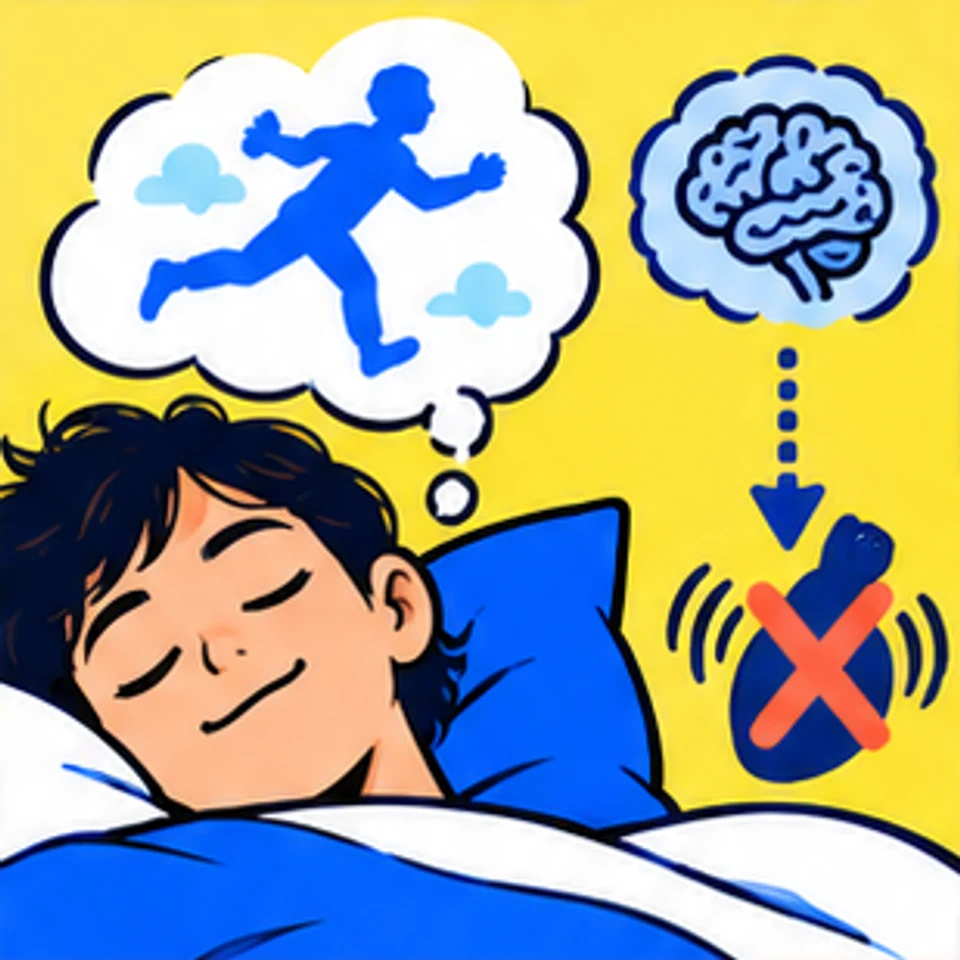
During REM sleep, most postural muscles are deeply relaxed even while the brain can dream vividly. This normal muscle inhibition is not the same as pathological paralysis.
Why does it happen?
Networks in the pons and medulla influence the spinal cord’s motor neurons. Inhibitory signals and reduced excitatory input lower their activity during REM sleep. The inhibition does not affect all muscles equally: eye movements and breathing by the diaphragm remain possible, and brief muscle twitches can occur.
Frequency
The extensive relaxation of skeletal muscles is part of normal REM sleep. It is a sleep-stage function, not a rare ability.
Frequency is a qualitative description, not your individual probability.
Is it normal?
Physiological movement inhibition during sleep.
When to seek advice
Repeated, vigorous acting out of dreams with risk of injury should be investigated by sleep medicine.
Does this happen to you?
Your answer is first saved only on this device.
How others answer
Loading results …
No shared answers yet.
Voluntary responses, not representative. One answer per saved browser key and article is counted. Multiple submissions are possible; people are not verified.
Sources (1)
- REM Sleep at its Core – Circuits, Neurotransmitters, and Pathophysiology (opens a new tab)
Brainstem and spinal networks produce normal REM muscle inhibition; individual muscle groups are affected differently.
Editorial update: . AI-assisted research and editing; not individually reviewed by a physician. How we research