In a nutshell
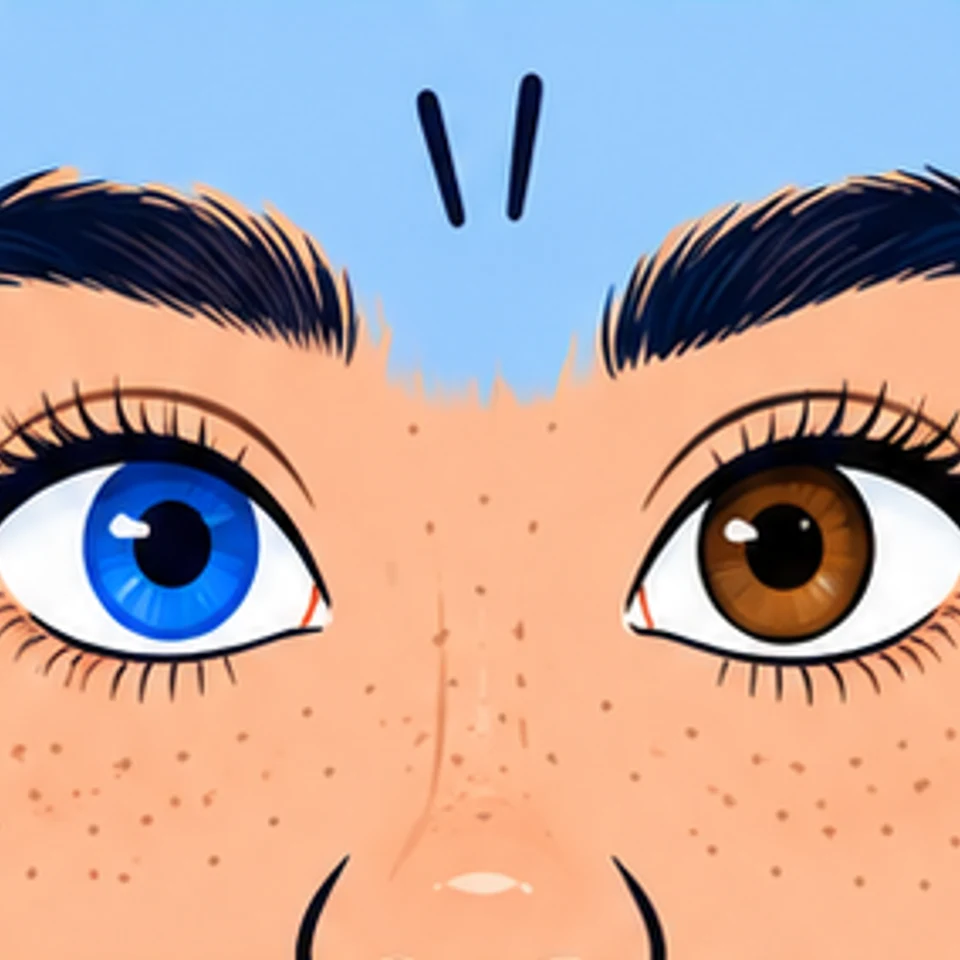
Two eyes can be differently colored; sometimes only part of an iris or a ring around the pupil differs. A stable color pattern known since early childhood is often a harmless variation. Newly developing color change has a different significance and should be examined.
Why does it happen?
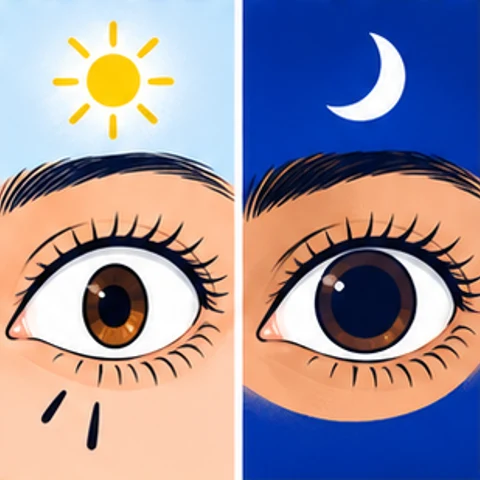
Iris color depends on the amount and distribution of melanin and on light scattering in iris tissue. Inflammation, injury, or certain medicines can later change pigmentation.
Frequency
Different iris colors affect only some people. Estimates depend greatly on whether complete, sectoral, and ring-shaped color differences are counted together.
Frequency is a qualitative description, not your individual probability.
Is it normal?
Stable since early childhood is usually benign.
When to seek advice
Have a newly noticed change in iris color examined by an eye specialist. Prompt assessment is needed with pain, light sensitivity, or visual disturbance.
Does this happen to you?
Your answer is first saved only on this device.
How others answer
Loading results …
No shared answers yet.
Voluntary responses, not representative. One answer per saved browser key and article is counted. Multiple submissions are possible; people are not verified.
Sources (1)
- American Academy of Ophthalmology: Heterochromia (opens a new tab)
Describes forms of different-colored irises and acquired causes.
Editorial update: . AI-assisted research and editing; not individually reviewed by a physician. How we research