In a nutshell
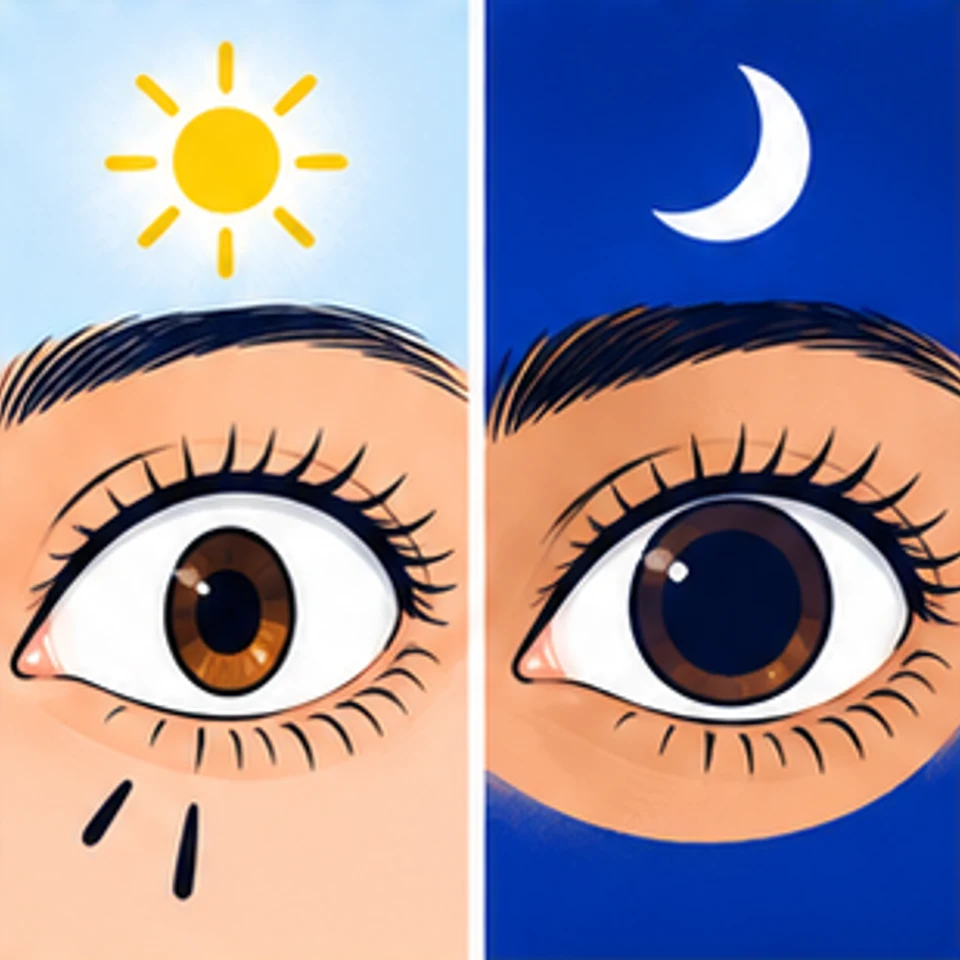
When the surroundings become brighter, the pupils normally get smaller. Shining light into one eye usually also triggers a response in the other eye.
Why does it happen?
Retinal signals from rods, cones, and photosensitive ganglion cells reach the midbrain. From there, bilateral parasympathetic pathways travel through the third cranial nerve to the iris. Contraction of the pupillary sphincter reduces the opening; near focus, alertness, and medications also affect pupil size.
Frequency
Pupil constriction in response to light is part of normal visual and autonomic nervous system function. Differences in response strength do not indicate a rare ability.
Frequency is a qualitative description, not your individual probability.
Is it normal?
Pupil size continuously adapts to conditions.
When to seek advice
A sudden new difference in pupil size accompanied by headache, double vision, or a drooping eyelid requires urgent assessment.
Does this happen to you?
Your answer is first saved only on this device.
How others answer
Loading results …
No shared answers yet.
Voluntary responses, not representative. One answer per saved browser key and article is counted. Multiple submissions are possible; people are not verified.
Sources (1)
- Eyeing up the Future of the Pupillary Light Reflex in Neurodiagnostics (opens a new tab)
This source supports the description and physiological context of this entry.
Editorial update: . AI-assisted research and editing; not individually reviewed by a physician. How we research