Dotted-underlined terms have brief explanations on hover, tap or keyboard focus.
In a nutshell
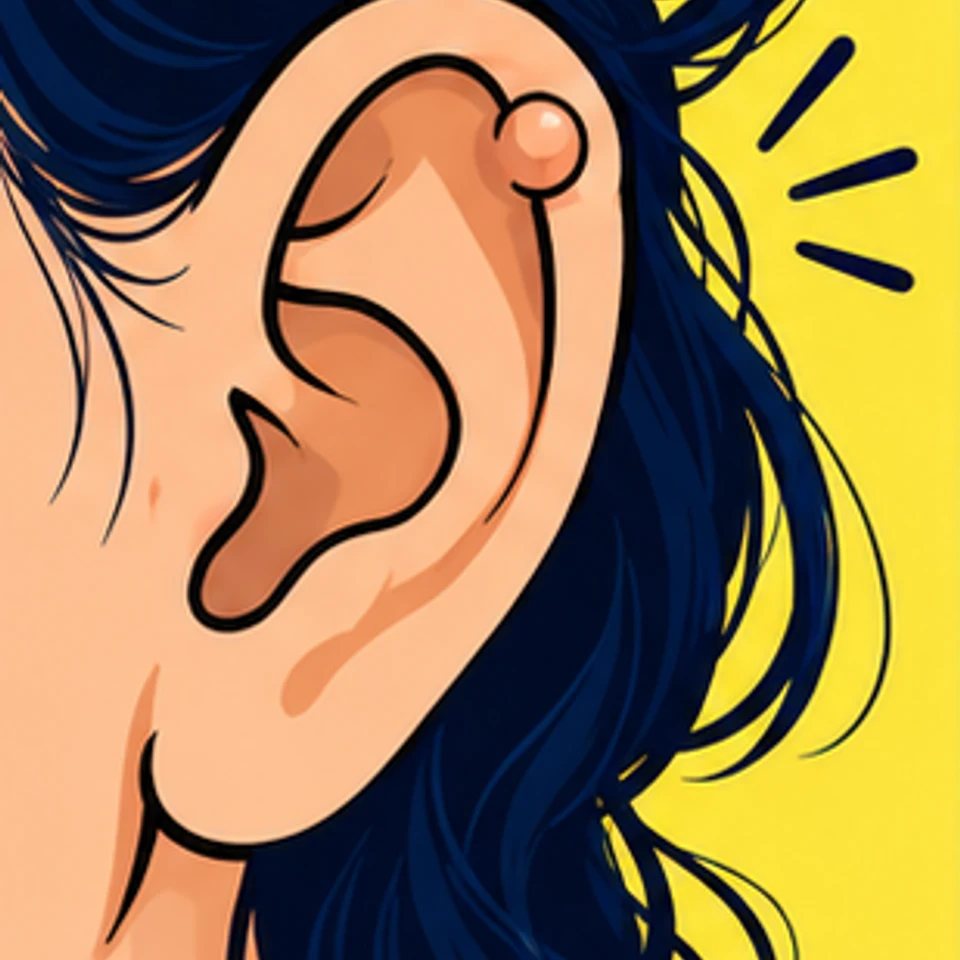
A small inward projection can occur along the outer rim of the ear. This Darwin’s tubercle may be present on one or both ears. It ranges from a barely visible bulge to a distinct nodule.
Why does it happen?
It is a developmental variation of the cartilaginous helix rim. Despite its historical name, it does not indicate special ancestry or individual hearing ability.
How common – and for whom?
Varies by individual
The auricular nodule has differing prevalence depending on the population studied and the definition used. A universal figure would be misleading.
Frequency is a qualitative description, not your individual probability.
Is it normal?
Stable, skin-colored, and painless is normal.
Voluntary control
not controllable
When to seek advice
Have a newly growing, bleeding, or painful skin/cartilage change assessed by a dermatologist.
Does this happen to you?
Your answer is first saved only on this device.
How others answer
Loading results …
No shared answers yet.
Voluntary responses, not representative. One answer per saved browser key and article is counted. Multiple submissions are possible; people are not verified.
Sources (1)
- Darwin's Tubercle: Review of a Unique Congenital Anomaly (opens a new tab)
Anatomical location and definition.
Editorial update: . AI-assisted research and editing; not individually reviewed by a physician. How we research