In a nutshell
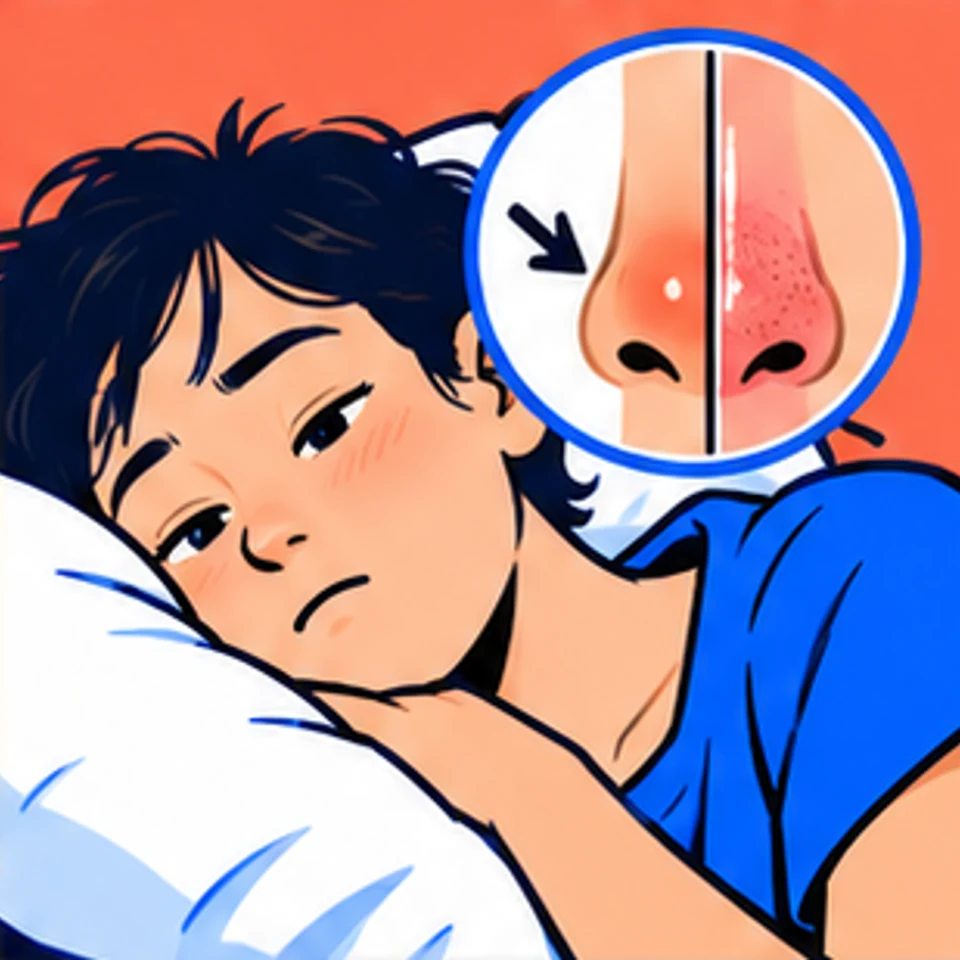
People lying on one side occasionally notice that the lower nasal side is more blocked. This positional effect can overlay the existing nasal cycle and change after turning over.
Why does it happen?
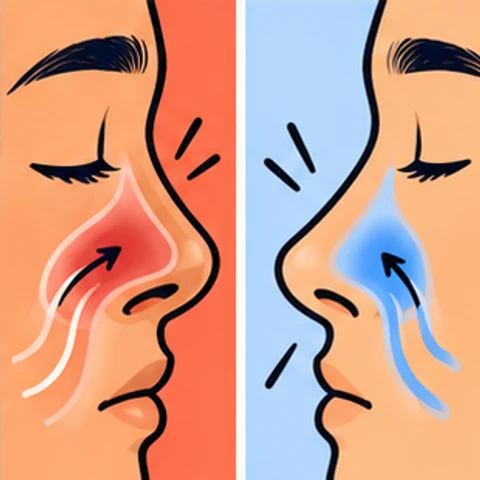
Body position influences blood filling of the nasal lining. Reflexive vascular control changes resistance in both nasal passages. The upper side often receives more airflow as a result; gravity alone does not fully explain the process.
Frequency
Many people notice differing nasal openness while lying on their side. How pronounced it is also depends on mucosal swelling and individual anatomy.
Frequency is a qualitative description, not your individual probability.
Is it normal?
Temporary, position-dependent blockage is common.
When to seek advice
Have a side that remains blocked regardless of position, or persistent symptoms with fever and pain, medically assessed.
Does this happen to you?
Your answer is first saved only on this device.
How others answer
Loading results …
No shared answers yet.
Voluntary responses, not representative. One answer per saved browser key and article is counted. Multiple submissions are possible; people are not verified.
Sources (1)
- Messung und Charakterisierung des menschlichen Nasenzyklus (opens a new tab)
Side sleeping is associated with greater airflow through the opposite nasal side.
Editorial update: . AI-assisted research and editing; not individually reviewed by a physician. How we research