In a nutshell
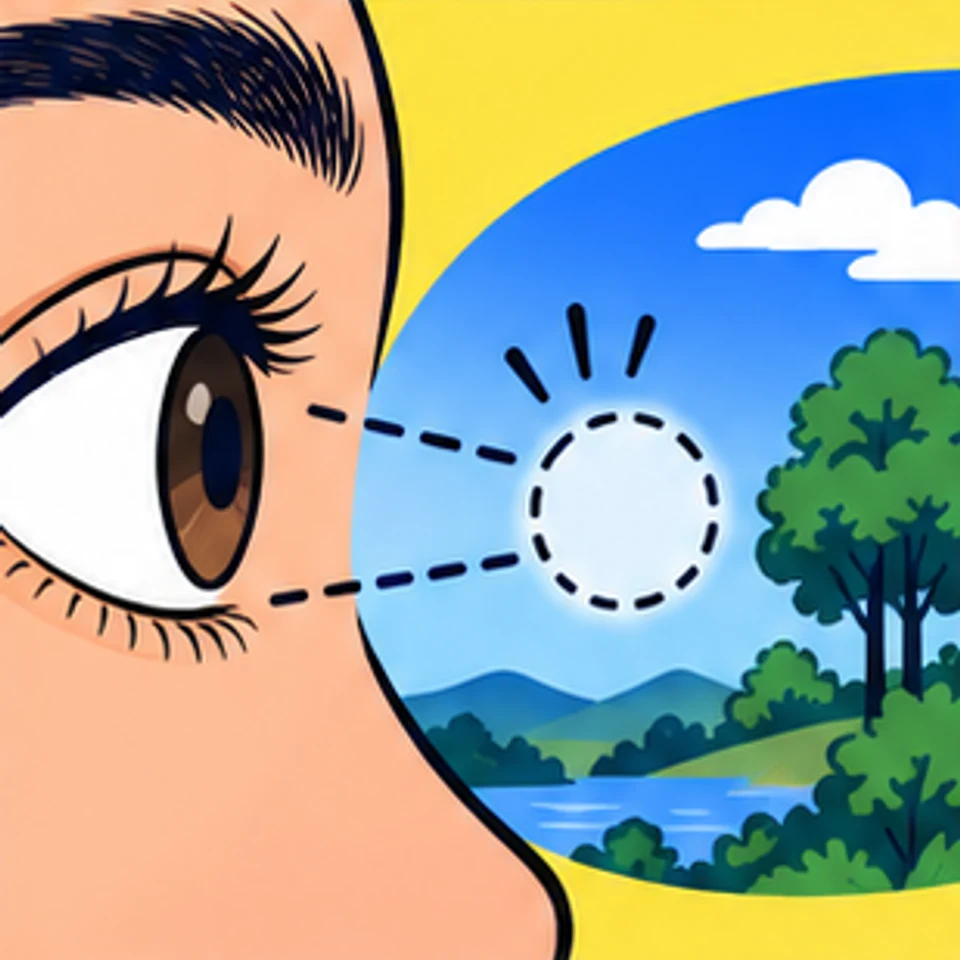
Each eye has a small area to the side of the fixation point that produces no visual impression. In everyday life, one usually does not notice a black hole there, because the other eye and the surroundings provide information.
Why does it happen?
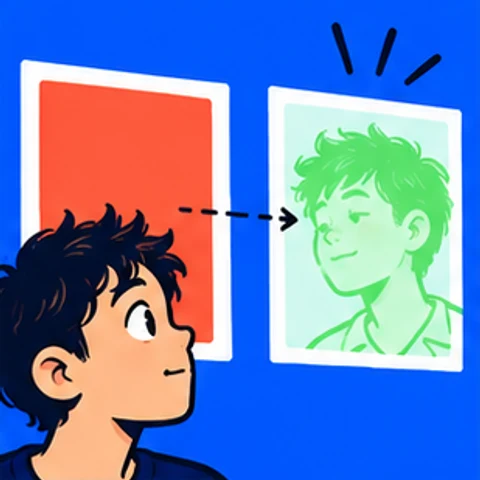
At the optic disc, nerve fibers leave the retina; there are no photoreceptors there. An object whose image falls exactly on this point cannot be seen by that eye. The visual system fills in simple surfaces and lines from the surroundings, and in binocular vision the other eye usually covers the area.
Frequency
The blind spot is part of the normal anatomy of every typically formed human eye. In everyday life, the gap is usually not consciously noticed.
Frequency is a qualitative description, not your individual probability.
Observe it yourself
- Draw a cross on the left and a dot about 8 cm to its right on white paper.
- Close your left eye, look at the cross with your right eye, and hold the page about an arm’s length away.
- Move it slowly closer without taking your gaze from the cross. At a suitable distance the dot briefly disappears; then blink normally.
Stop if uncomfortable. This is not a diagnostic test.
Is it normal?
Normal anatomy, not an individually rare variation.
When to seek advice
A newly appearing visual-field loss that is noticeable in everyday life is not a normal blind spot and should be assessed urgently by an eye specialist.
Does this happen to you?
Your answer is first saved only on this device.
How others answer
Loading results …
No shared answers yet.
Voluntary responses, not representative. One answer per saved browser key and article is counted. Multiple submissions are possible; people are not verified.
Sources (1)
- Blind Spot — Exploratorium (opens a new tab)
The optic disc has no light receptors; a paper experiment demonstrates the blind spot and perceptual completion.
Editorial update: . AI-assisted research and editing; not individually reviewed by a physician. How we research