In a nutshell
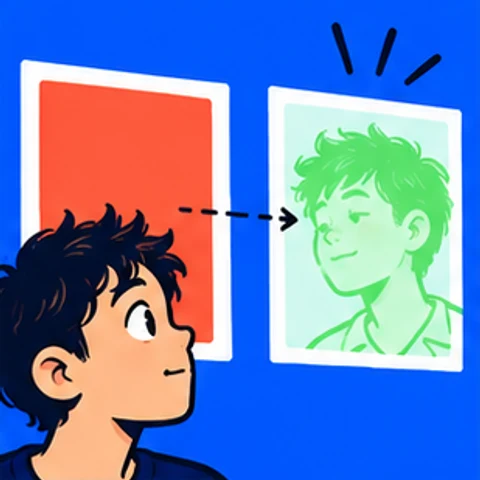
The two eyes view a scene from slightly different angles. These differences create a particularly precise impression of spatial depth.
Why does it happen?
Laterally offset eyes image nearby objects at different relative retinal positions. The brain compares matching image features and uses their horizontal disparity for depth perception. Other depth cues, such as perspective, occlusion, and motion parallax, remain available with one eye.
Frequency
Stereoscopic vision is a usual visual function when the eyes work well together. It is not available to everyone to the same extent.
Frequency is a qualitative description, not your individual probability.
Observe it yourself
- Hold one finger comfortably in front of you and look at a fixed object farther away.
- Close one eye and then the other without moving your head. The finger’s apparent shift shows the different viewing angles.
Stop if uncomfortable. This is not a diagnostic test.
Is it normal?
Normal visual function, expressed to different degrees in different people.
When to seek advice
New double vision or sudden loss of vision requires medical assessment.
Does this happen to you?
Your answer is first saved only on this device.
How others answer
Loading results …
No shared answers yet.
Voluntary responses, not representative. One answer per saved browser key and article is counted. Multiple submissions are possible; people are not verified.
Sources (1)
- The Perception of Depth — Webvision (opens a new tab)
Stereopsis uses binocular image differences; additional depth cues are also available with one eye.
Editorial update: . AI-assisted research and editing; not individually reviewed by a physician. How we research