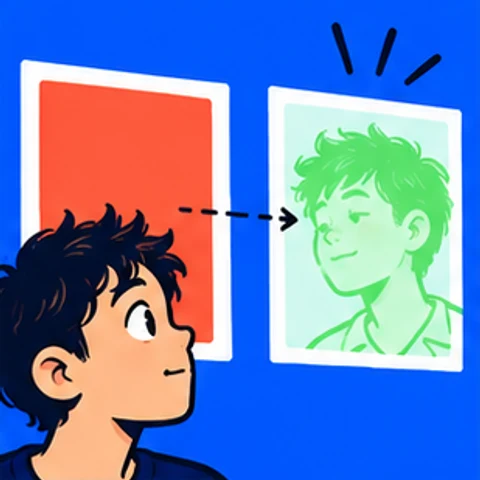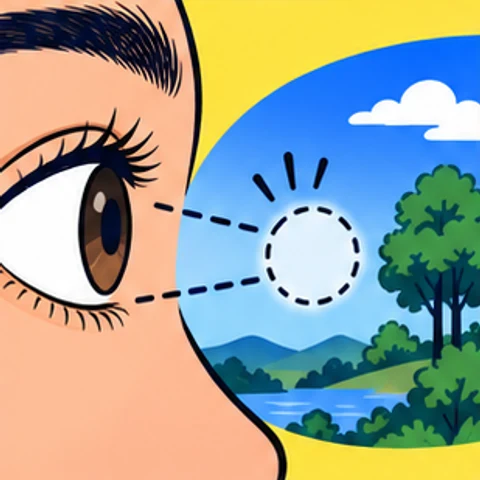
In a nutshell
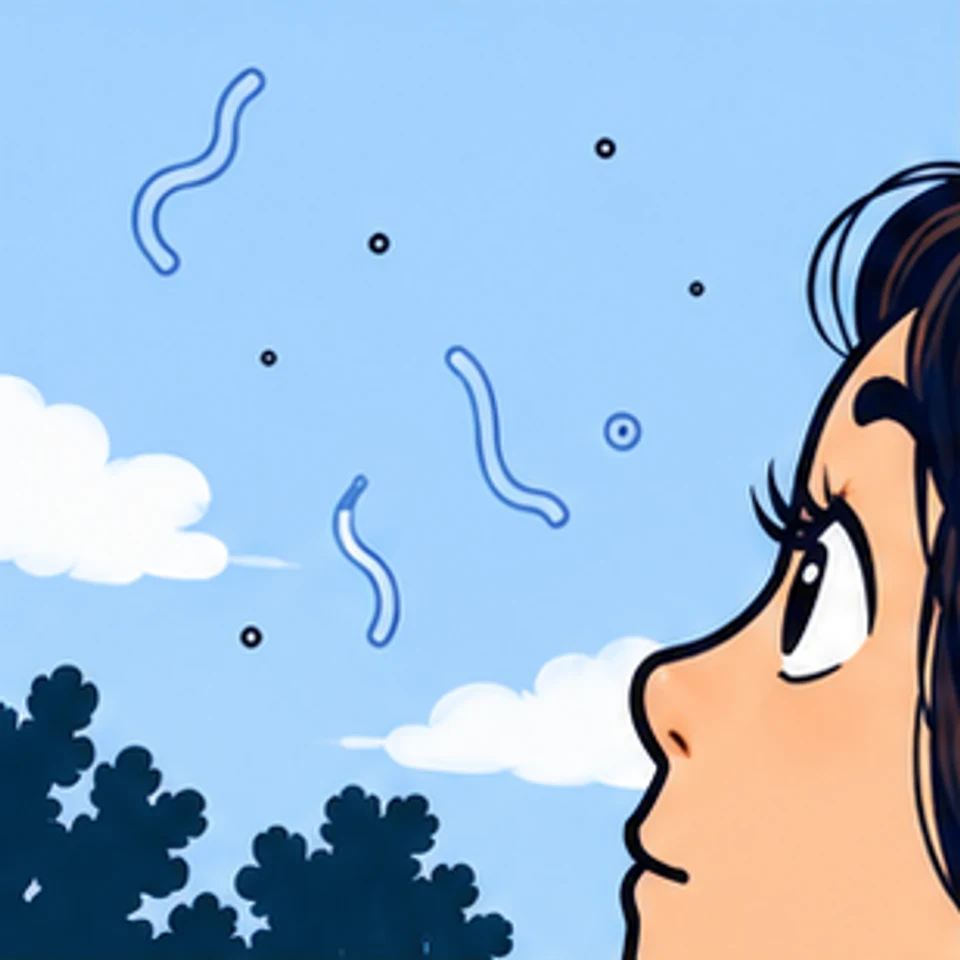
Small threads, dots, or cobwebs appear to float in front of the eye. They are especially noticeable against a bright wall and often drift away when you try to look directly at them.
Why does it happen?
The vitreous is a gel-like substance inside the eye. Small condensations cast shadows on the retina, making them visible. Its movement after a shift of gaze lets the shadows lag behind; age-related changes can increase their number.
Frequency
Vitreous opacities are common and tend to be noticed more with age. The frequency and number of visible dots vary between individuals.
Frequency is a qualitative description, not your individual probability.
Observe it yourself
- Briefly look at a normally lit, bright wall and move your gaze once to the side.
- Observe whether any threads you see lag behind. Do not look at the sun or put pressure on the eye.
Stop if uncomfortable. This is not a diagnostic test.
Is it normal?
Long-standing, unchanged individual floaters are usually harmless.
When to seek advice
Suddenly many new dots, new flashes of light, or a curtain-like shadow require an immediate eye examination, even without pain.
Does this happen to you?
Your answer is first saved only on this device.
How others answer
Loading results …
No shared answers yet.
Voluntary responses, not representative. One answer per saved browser key and article is counted. Multiple submissions are possible; people are not verified.
Sources (1)
- Floaters — National Eye Institute (opens a new tab)
Vitreous opacities cause moving shadows; sudden new floaters and accompanying warning signs need an eye examination.
Editorial update: . AI-assisted research and editing; not individually reviewed by a physician. How we research