In a nutshell
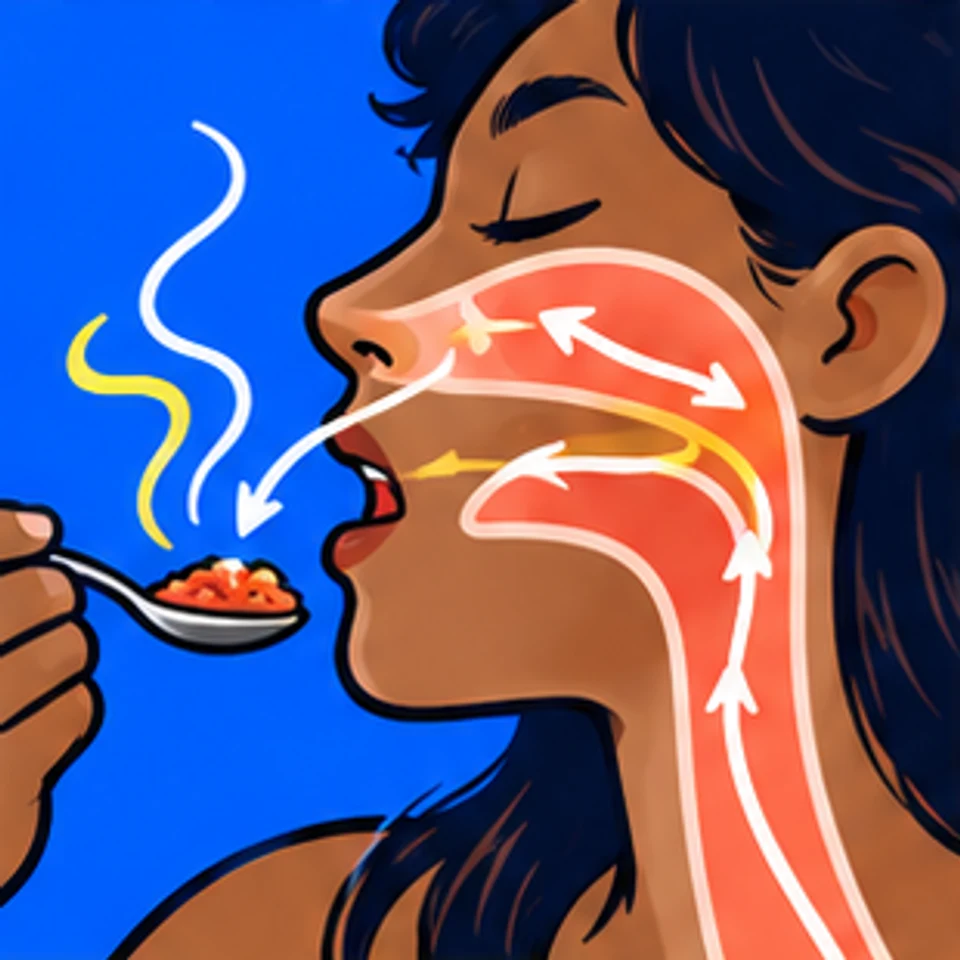
Many supposed taste nuances of food are actually smells. During chewing and swallowing, aroma compounds reach the nose from behind through the throat; this is why much food tastes less aromatic with a blocked nose.
Why does it happen?
Chewing releases volatile molecules from food. Air movements carry them from the mouth to the olfactory lining. The brain combines these signals with taste, temperature, and mouthfeel into the overall experience of flavor.
Frequency
Retronasal smelling is part of normal food perception when the sense of smell is working. It is not a rare extra ability.
Frequency is a qualitative description, not your individual probability.
Is it normal?
Normal flavor perception.
When to seek advice
Have a persistent or newly marked loss of smell or taste medically assessed.
Does this happen to you?
Your answer is first saved only on this device.
How others answer
Loading results …
No shared answers yet.
Voluntary responses, not representative. One answer per saved browser key and article is counted. Multiple submissions are possible; people are not verified.
Sources (1)
- Ein Modell der Aromawahrnehmung: Geschmack, Berührung und Geruch (opens a new tab)
The chapter explains retronasal transport and the multisensory composition of flavor perception.
Editorial update: . AI-assisted research and editing; not individually reviewed by a physician. How we research