In a nutshell
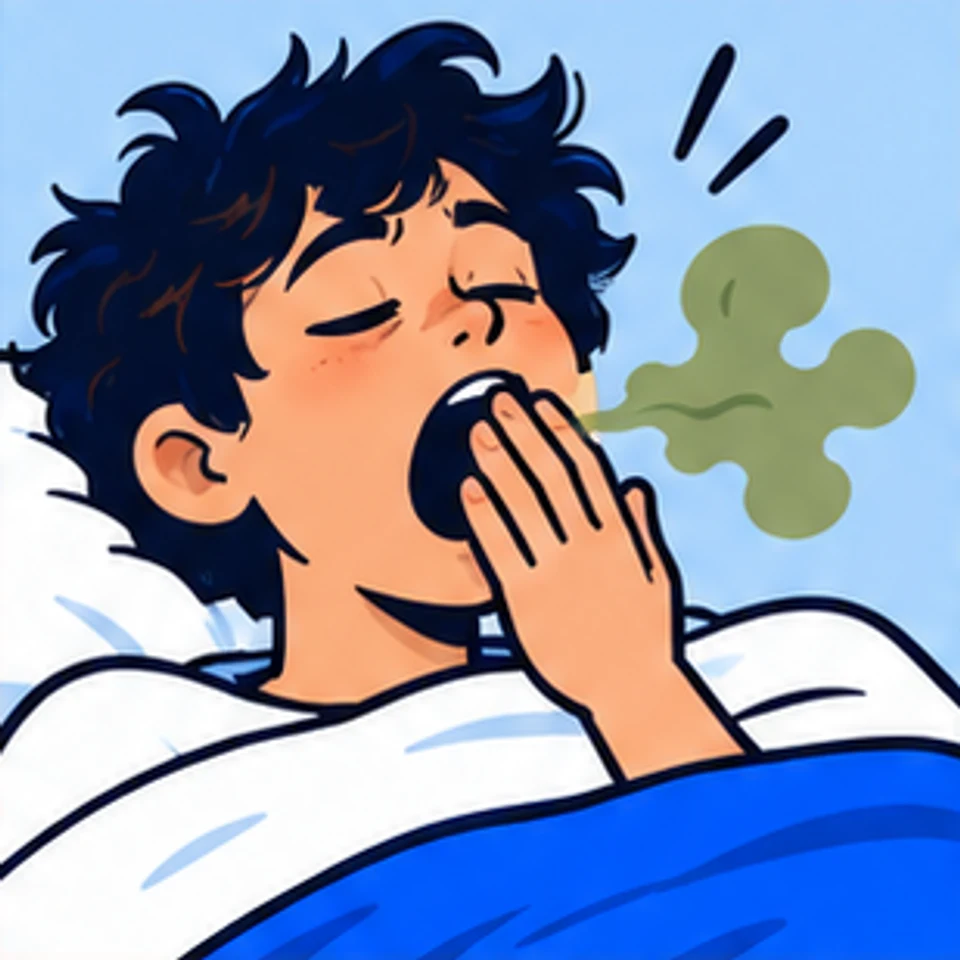
After waking, breath often smells stronger than it does during the day. Overnight, the mouth is rinsed less by saliva, so odor-producing substances remain more easily.
Why does it happen?
Saliva flow decreases during sleep. Oral bacteria break down organic material and produce volatile sulfur compounds, among other substances. Mouth breathing and dryness can intensify the effect; ordinary oral hygiene and eating stimulate cleansing and saliva flow again.
Frequency
A temporary change in breath odor in the morning is common. Its intensity depends partly on saliva flow and conditions in the mouth; persistent bad breath needs separate assessment.
Frequency is a qualitative description, not your individual probability.
Is it normal?
Rapid improvement after drinking and oral hygiene is usual.
When to seek advice
Persistent bad breath despite oral hygiene, bleeding gums, toothache, or pronounced dry mouth should be assessed by a dentist.
Does this happen to you?
Your answer is first saved only on this device.
How others answer
Loading results …
No shared answers yet.
Voluntary responses, not representative. One answer per saved browser key and article is counted. Multiple submissions are possible; people are not verified.
Sources (1)
- Morgenatem: warum er entsteht und was hilft (opens a new tab)
This source supports the description and physiological context of this entry.
Editorial update: . AI-assisted research and editing; not individually reviewed by a physician. How we research