In a nutshell
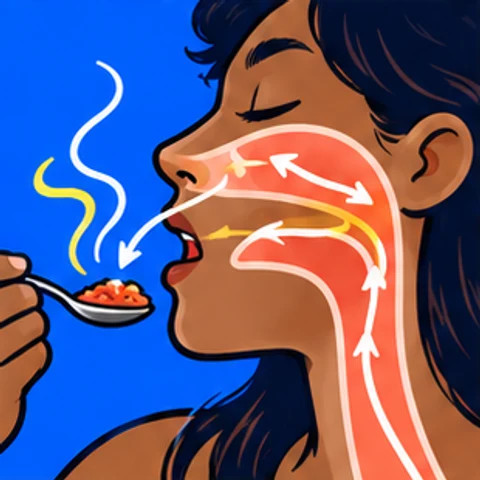
Garlic odor can persist after the teeth have been brushed. Alongside remnants in the mouth, absorbed sulfur compounds that are later exhaled contribute to the smell.
Why does it happen?
Crushing and processing garlic produces odor-active sulfur compounds. Some breakdown products pass from the intestine into the circulation. Allyl methyl sulfide in particular can move from the blood into exhaled air for an extended period.
Frequency
Noticeable breath odor after garlic is a familiar and widespread effect. Its strength and duration depend partly on the amount eaten and individual metabolism.
Frequency is a qualitative description, not your individual probability.
Is it normal?
Temporary odor is expected.
When to seek advice
Persistent bad breath unrelated to food should be assessed by a dentist.
Does this happen to you?
Your answer is first saved only on this device.
How others answer
Loading results …
No shared answers yet.
Voluntary responses, not representative. One answer per saved browser key and article is counted. Multiple submissions are possible; people are not verified.
Sources (1)
- Messung von Allylmethylsulfid, Allylmethylsulfoxid und Allylmethylsulfon in Muttermilch und Urin nach gekochtem und geröstetem Knoblauch (opens a new tab)
This source supports the description and physiological context of this entry.
Editorial update: . AI-assisted research and editing; not individually reviewed by a physician. How we research