In a nutshell
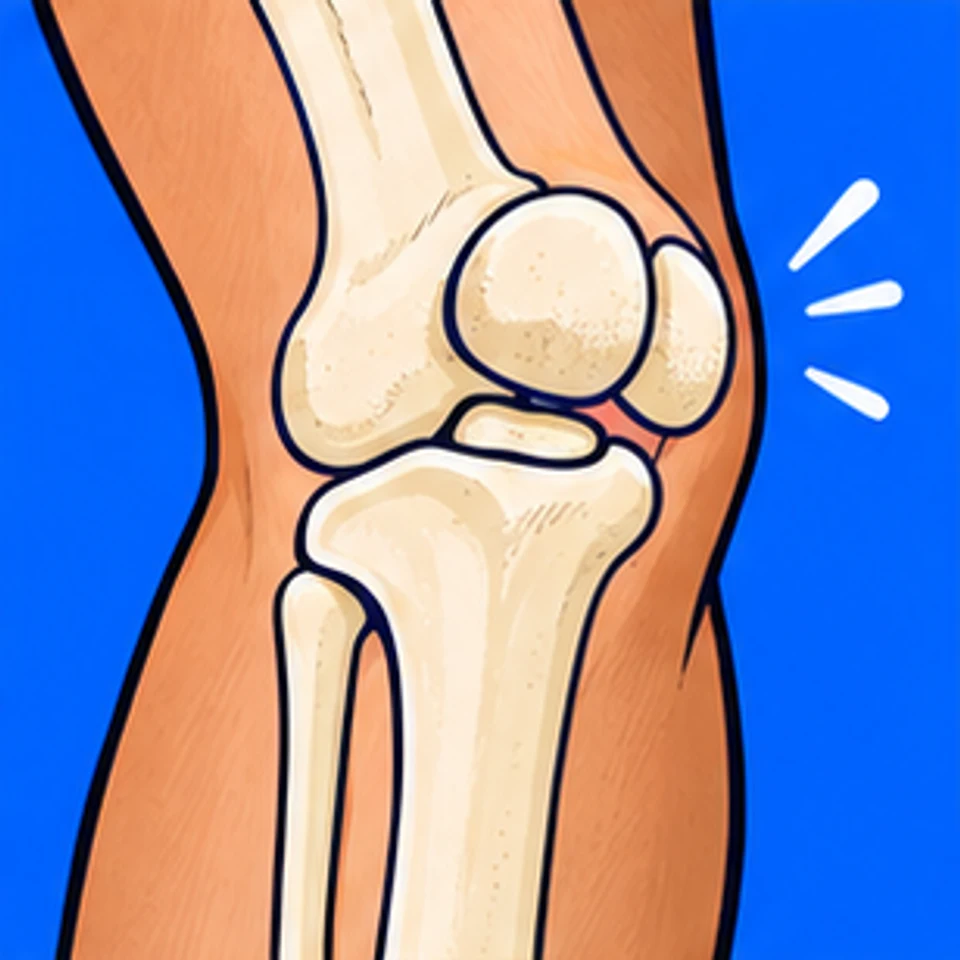
A bipartite patella is often found incidentally on an X-ray. The kneecap then consists of a main part and a smaller additional part, usually at the upper outer edge. It is a developmental variation and not automatically a bone fracture.
Why does it happen?
An additional ossification center does not fully fuse with the main part during growth. Fibrocartilage can remain between the two parts; strain or injury can irritate this connection.
Frequency
A bipartite patella affects only some people and often goes unnoticed. Imaging findings and cases that are actually painful should therefore be counted separately.
Frequency is a qualitative description, not your individual probability.
Is it normal?
Many affected people have no pain or loss of function at all.
When to seek advice
New knee pain after an accident, marked swelling, or inability to actively straighten the knee requires examination. Persistent pain with exertion should also be assessed.
Does this happen to you?
Your answer is first saved only on this device.
How others answer
Loading results …
No shared answers yet.
Voluntary responses, not representative. One answer per saved browser key and article is counted. Multiple submissions are possible; people are not verified.
Sources (1)
- Floyd et al.: Arthroscopic Excision of Bipartite Patella (opens a new tab)
Arises from an additional ossification center, is often an incidental finding, and can cause pain.
Editorial update: . AI-assisted research and editing; not individually reviewed by a physician. How we research