In a nutshell
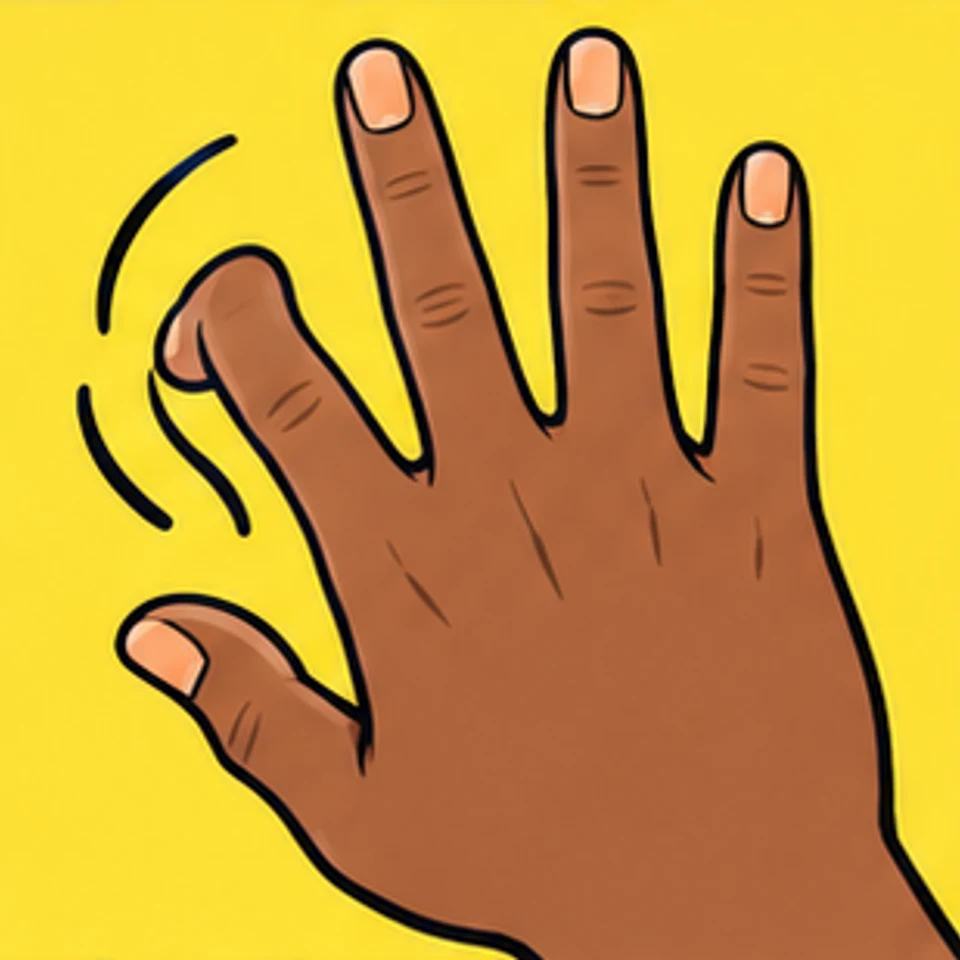
Some little fingers curve slightly toward the ring finger. This clinodactyly develops during growth and is often simply a difference in shape without limitation. A more pronounced curve can cause fingers to overlap when grasping.
Why does it happen?
The sideways curvature is related to the shape and growth of a finger bone. A wedge-shaped rather than roughly rectangular bone can redirect growth sideways.
Frequency
Mild sideways finger curvatures are recorded at different rates depending on the definition. Clinically notable forms should not be equated with every small deviation.
Frequency is a qualitative description, not your individual probability.
Is it normal?
A mild curvature present since childhood often does not impair hand function.
When to seek advice
A pediatric orthopedic assessment is sensible if overlap increases, grasping is limited, or there are additional developmental differences. A hand that becomes crooked suddenly after an injury is not congenital clinodactyly.
Does this happen to you?
Your answer is first saved only on this device.
How others answer
Loading results …
No shared answers yet.
Voluntary responses, not representative. One answer per saved browser key and article is counted. Multiple submissions are possible; people are not verified.
Sources (1)
- Children’s Hospital of Philadelphia: Clinodactyly (opens a new tab)
Sideways finger curvature, possible overlap, and clinical assessment.
Editorial update: . AI-assisted research and editing; not individually reviewed by a physician. How we research