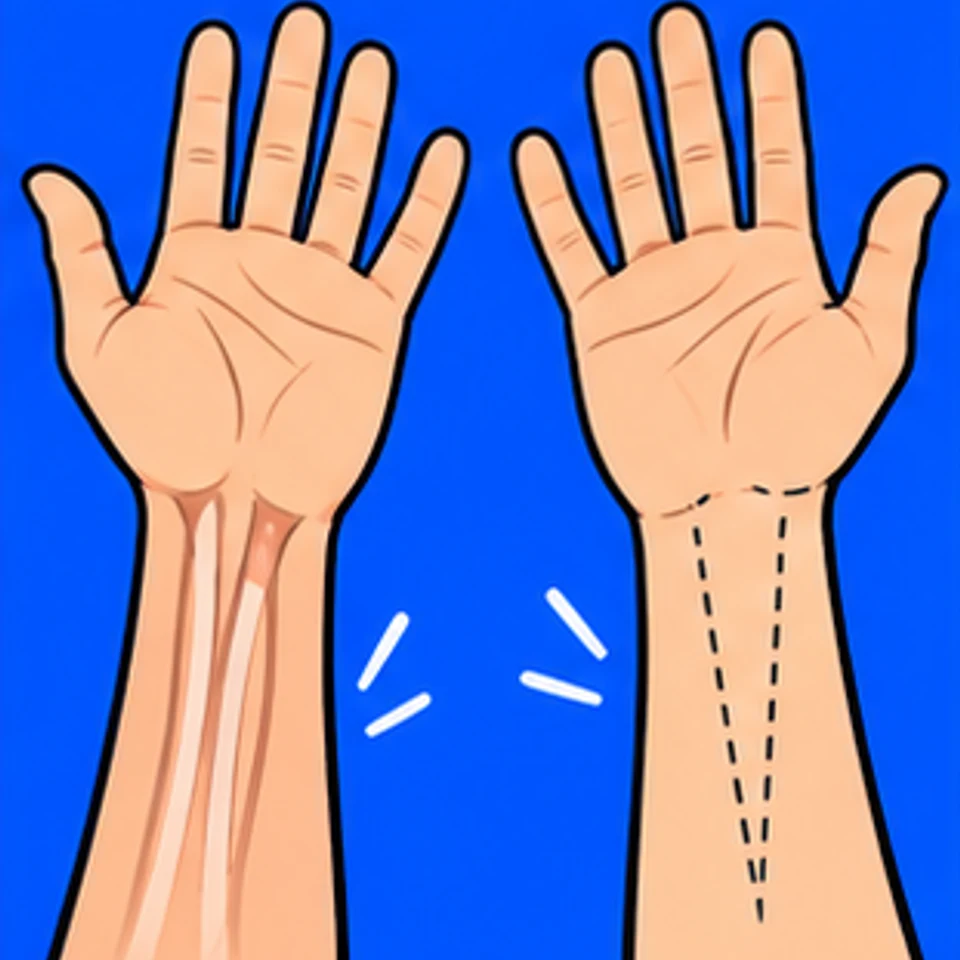
In a nutshell
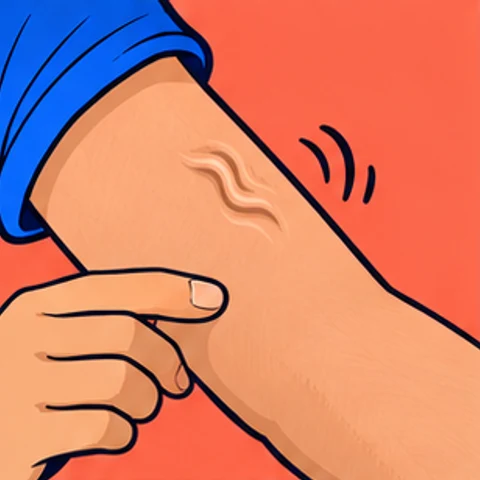
The palmaris longus is a narrow forearm muscle with a long tendon toward the palm. It can be absent on one or both sides without the person knowing. Usually there is no noticeable loss of function in daily life.
Why does it happen?
Other forearm muscles perform most wrist movement and gripping work. One study found no reduced grip or pinch strength when the muscle was absent; this does not mean the muscle has no function at all.
Frequency
This congenital absence is a well-documented variation. How often it occurs on one or both sides differs substantially between populations.
Frequency is a qualitative description, not your individual probability.
Is it normal?
Painless absence is normal.
When to seek advice
Weakness, numbness, or pain do not prove its absence and should be examined.
Does this happen to you?
Your answer is first saved only on this device.
How others answer
Loading results …
No shared answers yet.
Voluntary responses, not representative. One answer per saved browser key and article is counted. Multiple submissions are possible; people are not verified.
Sources (1)
- Sebastin et al.: Does the absence of the palmaris longus affect grip and pinch strength? (opens a new tab)
Examines grip and pinch strength in congenital absence of the muscle.
Editorial update: . AI-assisted research and editing; not individually reviewed by a physician. How we research