In a nutshell
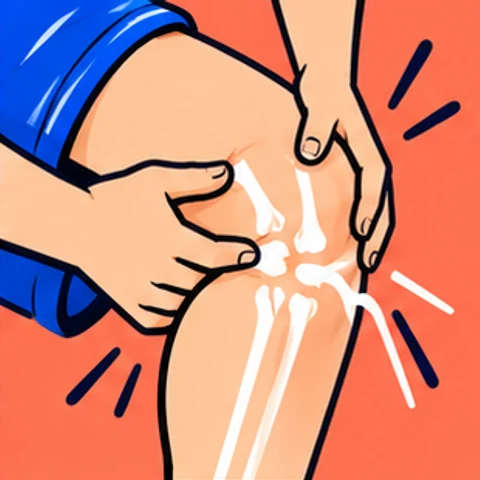
Some joints can move farther than in other people. This may be local or affect several joints and can be entirely symptom-free. Only additional problems such as pain or repeated instability may make high mobility a condition needing treatment.
Why does it happen?
Joint shape, ligaments, connective tissue, and muscular control jointly determine range of motion. High mobility alone proves neither a particular collagen disorder nor Ehlers–Danlos syndrome.
Frequency
High joint mobility is not unusual. Estimates differ by age, joints examined, and definition; symptom-free mobility is not equivalent to a hypermobility syndrome.
Frequency is a qualitative description, not your individual probability.
Is it normal?
Often a normal variation without pain or instability.
When to seek advice
Have repeated dislocations, severe pain, swelling, or marked fatigue medically assessed.
Does this happen to you?
Your answer is first saved only on this device.
How others answer
Loading results …
No shared answers yet.
Voluntary responses, not representative. One answer per saved browser key and article is counted. Multiple submissions are possible; people are not verified.
Sources (1)
- Hypermobility spectrum disorders: A review (opens a new tab)
Symptoms, causes, and assessment.
Editorial update: . AI-assisted research and editing; not individually reviewed by a physician. How we research