In a nutshell
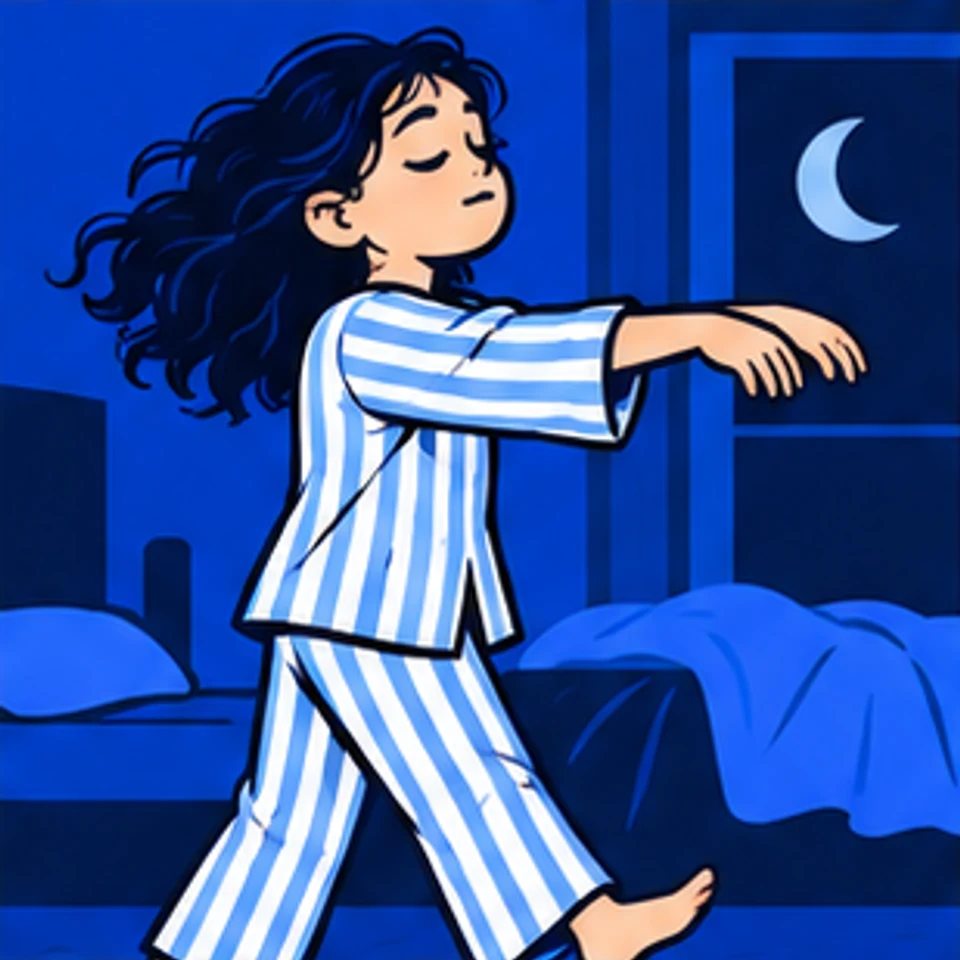
A person gets up and walks around at night without being fully awake. Their eyes may be open, yet they may respond poorly and remember little afterward.
Why does it happen?
Sleepwalking is an incomplete arousal from NREM sleep. Movement sequences may be active while other processes needed for orientation and conscious control remain sleep-like. Sleep deprivation, irregular sleep, or disruptive arousal stimuli can make episodes more likely.
Frequency
Sleepwalking is more common in children than in adults. A history of an isolated episode and currently recurring sleepwalking produce different prevalence figures.
Frequency is a qualitative description, not your individual probability.
Is it normal?
A recognized parasomnia that deserves attention because of the risk of accidents.
When to seek advice
Seek medical assessment for injuries, frequent episodes, or new onset in adulthood; secure windows and stairs and calmly guide the person back.
Does this happen to you?
Your answer is first saved only on this device.
How others answer
Loading results …
No shared answers yet.
Voluntary responses, not representative. One answer per saved browser key and article is counted. Multiple submissions are possible; people are not verified.
Sources (1)
- NonREM Disorders of Arousal and Related Parasomnias: an Updated Review (opens a new tab)
This source supports the description and physiological context of this entry.
Editorial update: . AI-assisted research and editing; not individually reviewed by a physician. How we research