In a nutshell
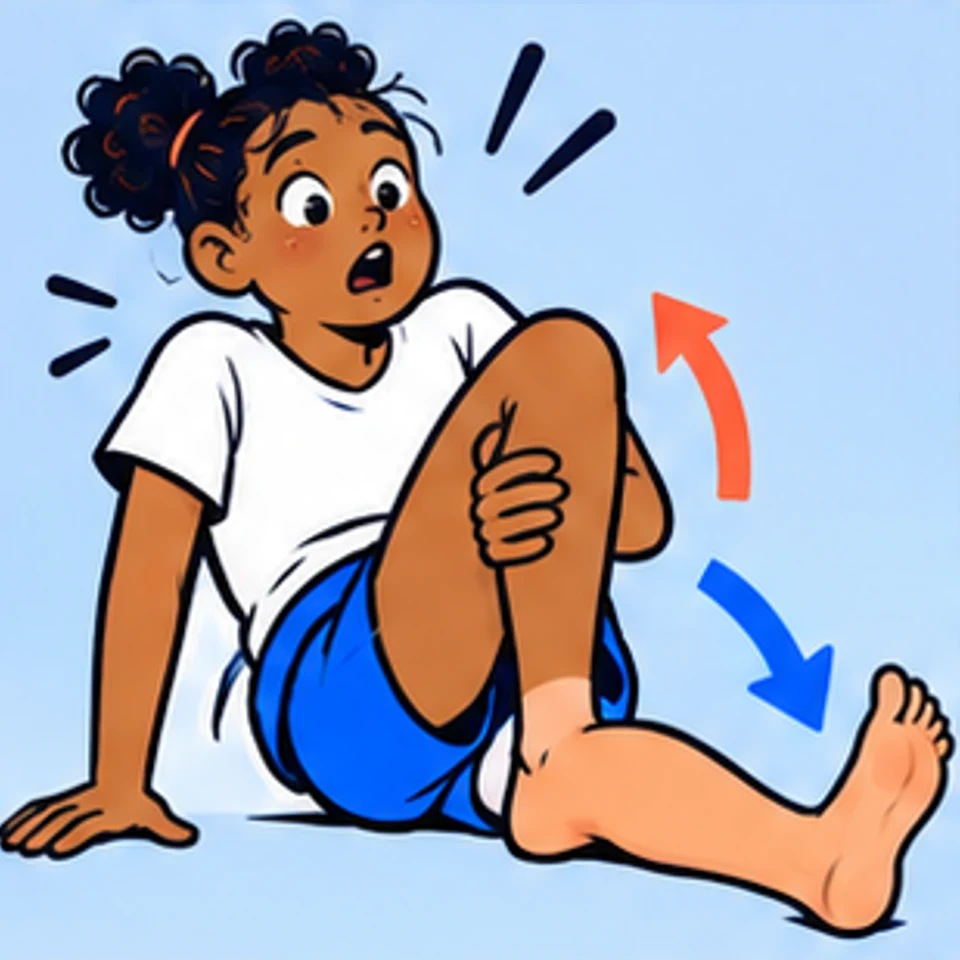
When someone steps on something painful, they may pull back the affected leg while the other leg takes more weight. This counter-reaction supports standing before a conscious decision is needed. The sequence also depends on posture and movement situation.
Why does it happen?
Painful stimuli activate several interconnected nerve cells in the spinal cord. On the stimulated side, flexion is supported, while on the opposite side extensor muscles are activated and their opposing muscles inhibited.
Frequency
The crossed extensor reflex is part of normal protective and postural circuits. Whether the response is noticed in everyday life depends on the stimulus and movement situation.
Frequency is a qualitative description, not your individual probability.
Is it normal?
Normal protective response to sudden pain.
When to seek advice
Do not deliberately test this with painful or sharp stimuli. New weakness, sensory changes, or gait problems should be medically examined.
Does this happen to you?
Your answer is first saved only on this device.
How others answer
Loading results …
No shared answers yet.
Voluntary responses, not representative. One answer per saved browser key and article is counted. Multiple submissions are possible; people are not verified.
Sources (1)
- University of Oregon: Spinal Reflexes (opens a new tab)
Explains the wiring of the withdrawal reflex and reciprocal extension.
Editorial update: . AI-assisted research and editing; not individually reviewed by a physician. How we research