In a nutshell
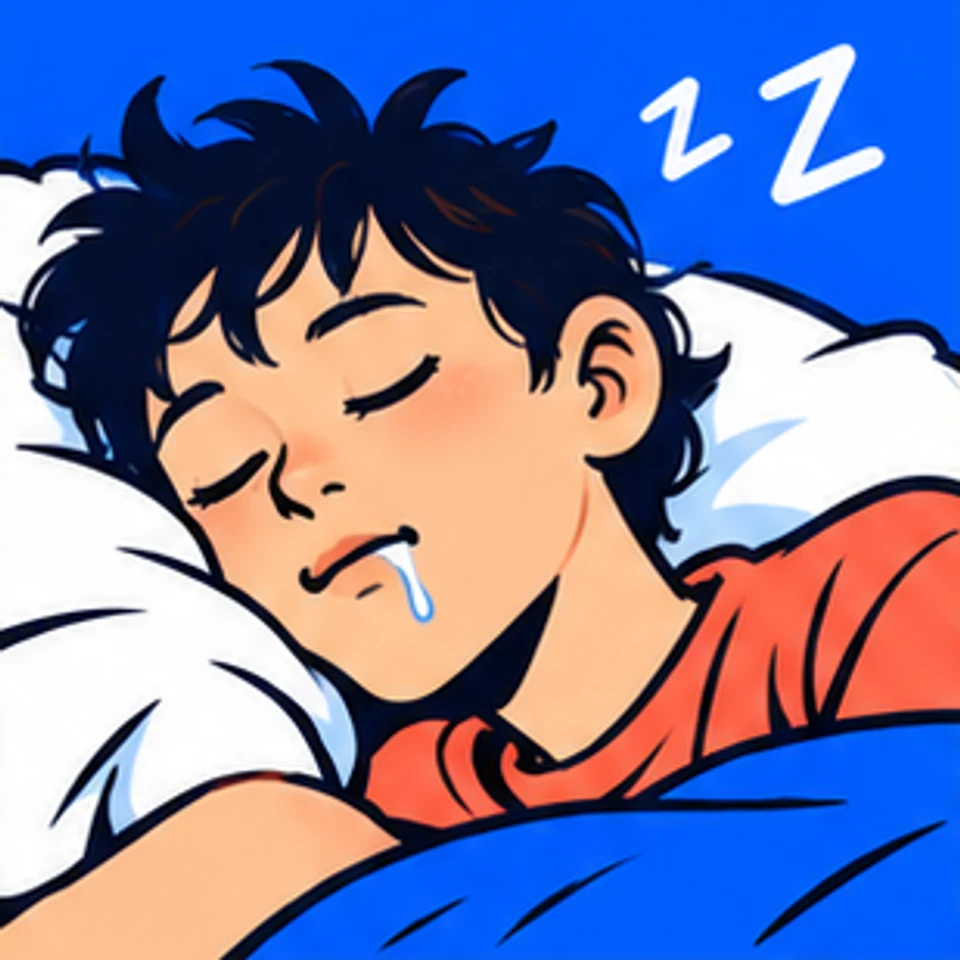
Saliva is swallowed at night as well, though not as regularly as while awake. Many of these swallows are linked to brief brain activations that are not remembered in the morning.
Why does it happen?
The swallowing sequence coordinates the mouth, throat, and esophagus. Breathing is coordinated with swallowing for a moment. Sleep studies show that nighttime swallows often occur together with brief arousals and a temporary increase in pulse rate.
Frequency
Swallowing also occurs during normal sleep, though less often and less regularly than when awake. A fixed number per night cannot be given for everyone.
Frequency is a qualitative description, not your individual probability.
Is it normal?
A normal automatic function.
When to seek advice
Repeated choking at night, coughing fits, pauses in breathing, or daytime swallowing problems should be medically assessed.
Does this happen to you?
Your answer is first saved only on this device.
How others answer
Loading results …
No shared answers yet.
Voluntary responses, not representative. One answer per saved browser key and article is counted. Multiple submissions are possible; people are not verified.
Sources (1)
- Nächtliches Schlucken verstärkt Weckreaktionen und den dabei auftretenden Pulsanstieg (opens a new tab)
This source supports the description and physiological context of this entry.
Editorial update: . AI-assisted research and editing; not individually reviewed by a physician. How we research