In a nutshell
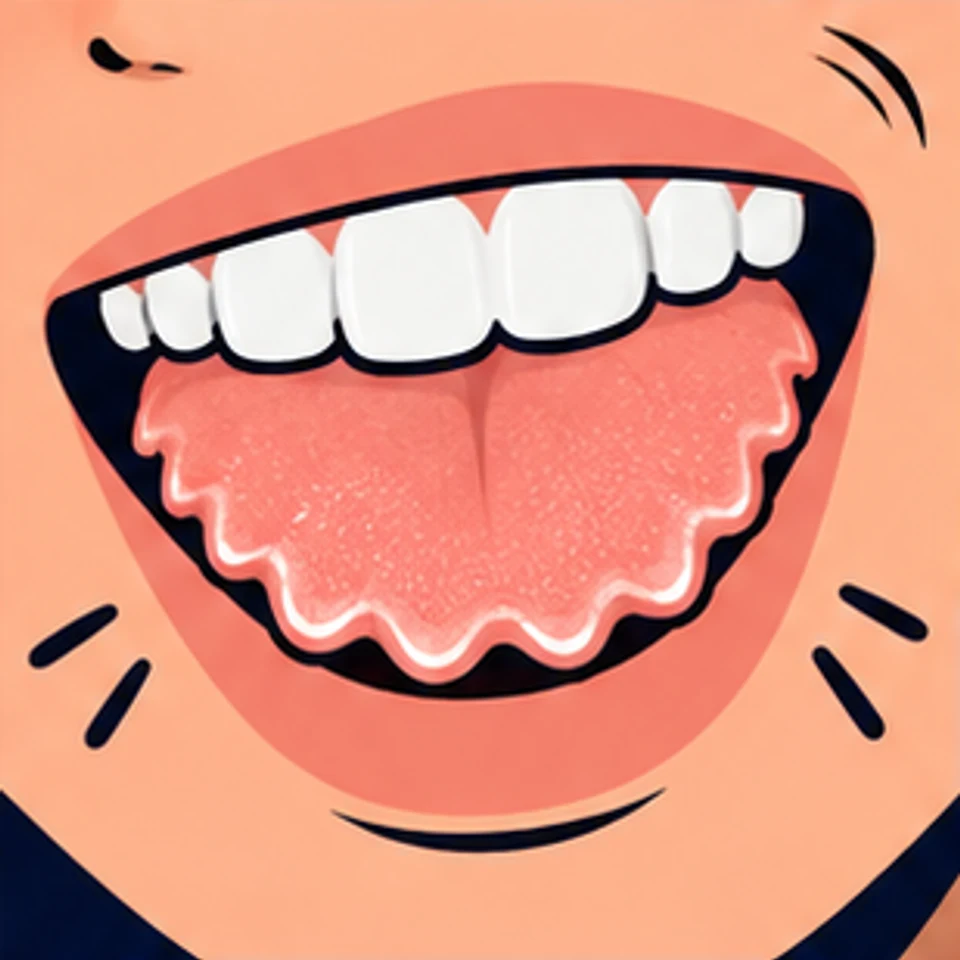
Wavy indentations along the tongue’s edge often match the adjacent teeth. They can result from pressure and alone do not reliably demonstrate a particular illness or nutrient deficiency.
Why does it happen?
Soft tongue tissue rests against the teeth for a prolonged period. Pressure, such as during clenching, can imprint their contours. An enlarged or swollen tongue may increase contact; the shape alone does not reveal the cause.
Frequency
Tooth impressions along the edge of the tongue are observed in various situations. No single reliable population estimate is available here, partly because different degrees are grouped together.
Frequency is a qualitative description, not your individual probability.
Is it normal?
Usually harmless when there are no symptoms.
When to seek advice
New persistent indentations or pain should be discussed with a dentist; sudden rapid tongue swelling with difficulty breathing or swallowing is an emergency: call emergency services.
Does this happen to you?
Your answer is first saved only on this device.
How others answer
Loading results …
No shared answers yet.
Voluntary responses, not representative. One answer per saved browser key and article is counted. Multiple submissions are possible; people are not verified.
Sources (1)
- Zahnabdrücke am Zungenrand: mögliche Ursachen (opens a new tab)
This source supports the description and physiological context of this entry.
Editorial update: . AI-assisted research and editing; not individually reviewed by a physician. How we research