In a nutshell
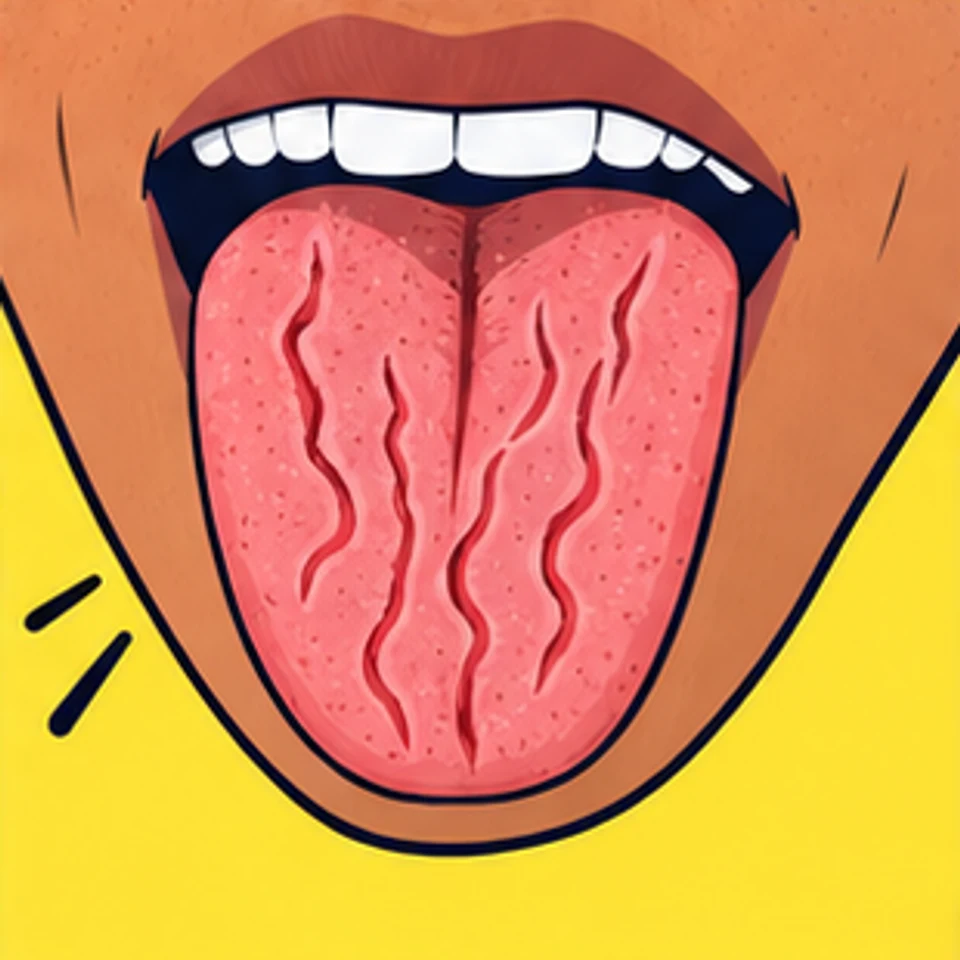
A fissured tongue has one or more grooves on its upper surface. The grooves are usually a harmless shape variation and generally cause no symptoms themselves.
Why does it happen?
The tongue surface has depressions of varying depth. Food debris and coating can collect in them. Burning or bad breath can occur only if this causes irritation; exactly how the grooves arise is not conclusively known.
Frequency
Fissured tongue is a known variation with differing degrees of expression. It is seen more often with increasing age; estimates also depend on which groove depth is counted.
Frequency is a qualitative description, not your individual probability.
Is it normal?
Gentle tongue hygiene is usually sufficient.
When to seek advice
Have bleeding, hardened, or nonhealing areas examined by a dentist.
Does this happen to you?
Your answer is first saved only on this device.
How others answer
Loading results …
No shared answers yet.
Voluntary responses, not representative. One answer per saved browser key and article is counted. Multiple submissions are possible; people are not verified.
Sources (1)
- Furchenzunge: Ursachen und Umgang damit (opens a new tab)
The source describes a benign surface variation and possible irritation from trapped food debris.
Editorial update: . AI-assisted research and editing; not individually reviewed by a physician. How we research