In a nutshell
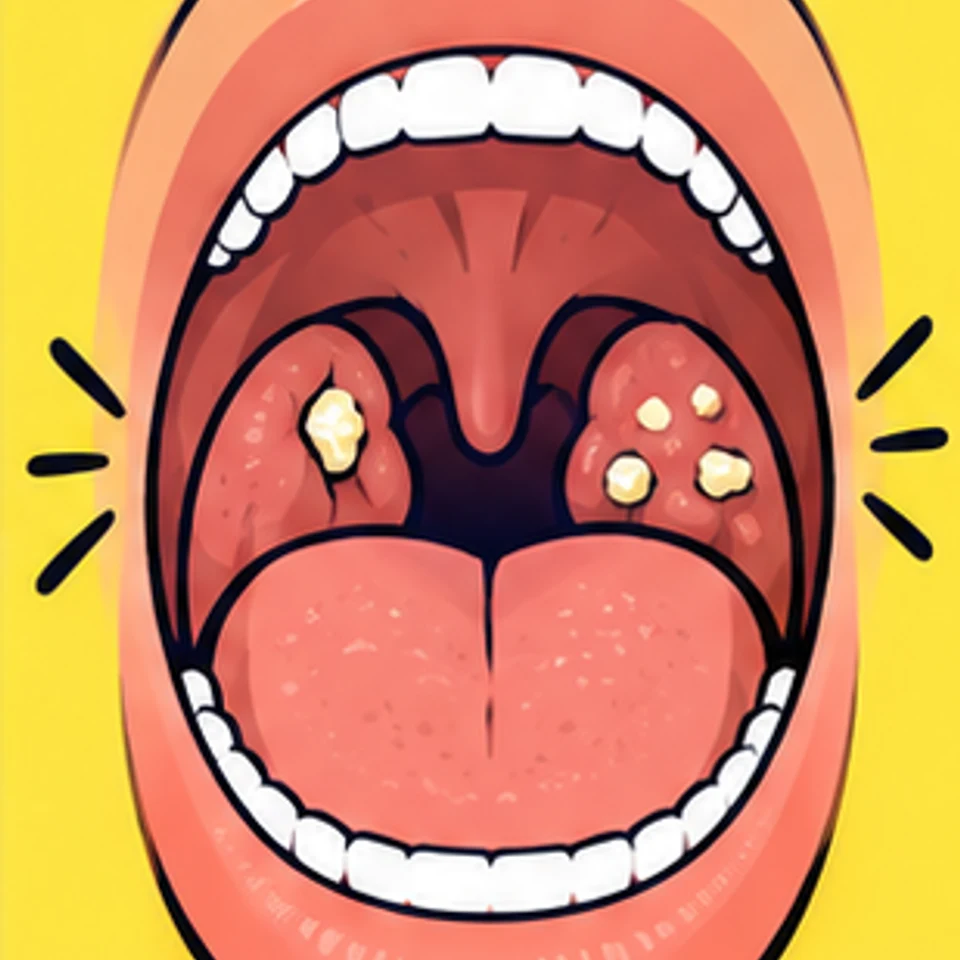
Tonsil stones are small, pale deposits in the hollows of the palatine tonsils. They often go unnoticed but can cause bad breath or a foreign-body sensation.
Why does it happen?
Cell debris, food particles, and microorganisms collect in tonsillar crypts. The material can mineralize and become firmer. Bacterial breakdown products contribute to the odor; a stone does not automatically mean acute tonsillitis.
Frequency
Tonsil stones are found in some people and may go unnoticed. A reliable general prevalence depends on the examination method and minimum size, so none is given here.
Frequency is a qualitative description, not your individual probability.
Is it normal?
Small stones without symptoms are usually harmless.
When to seek advice
Fever, severe one-sided throat pain, difficulty opening the jaw, or swallowing problems should be medically assessed; seek immediate help for difficulty breathing. Do not use sharp tools on the tonsils.
Does this happen to you?
Your answer is first saved only on this device.
How others answer
Loading results …
No shared answers yet.
Voluntary responses, not representative. One answer per saved browser key and article is counted. Multiple submissions are possible; people are not verified.
Sources (1)
- Mandelsteine: Symptome, Ursachen und Behandlung (opens a new tab)
This source supports the description and physiological context of this entry.
Editorial update: . AI-assisted research and editing; not individually reviewed by a physician. How we research