In a nutshell
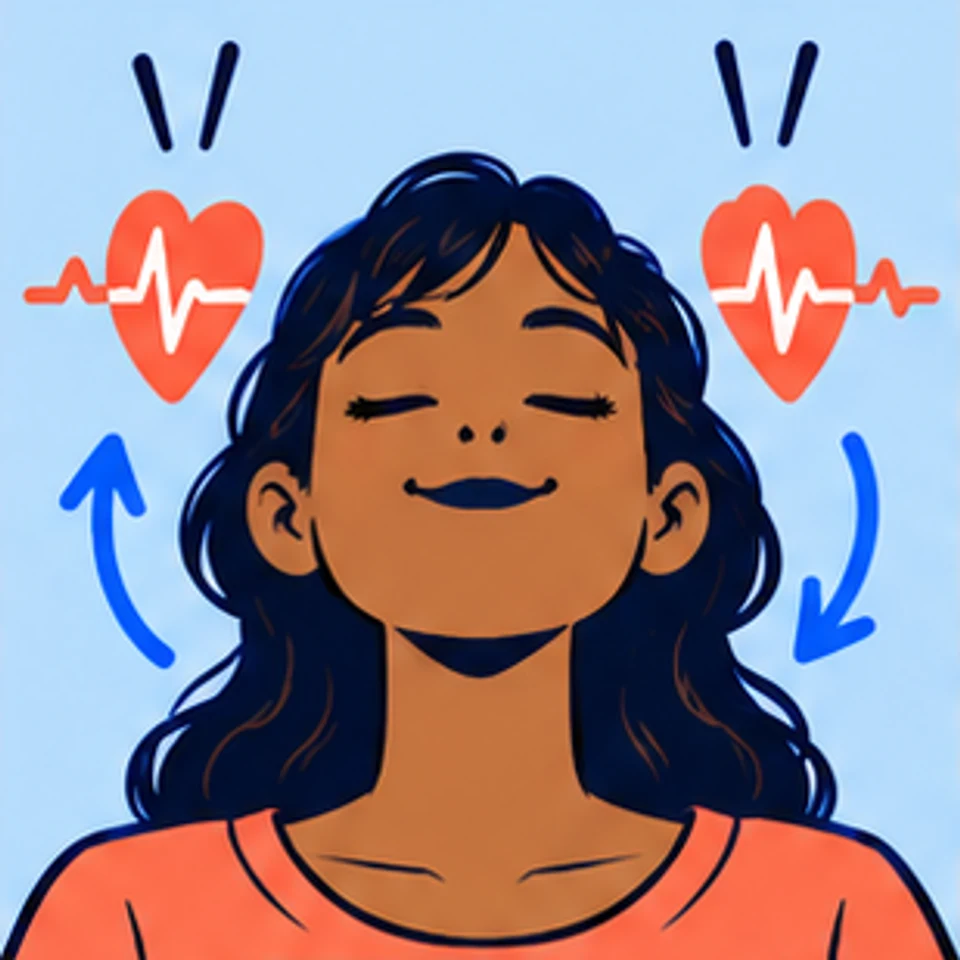
In many healthy people, the heart rate speeds up slightly during inhalation and slows during exhalation. This breathing-linked fluctuation is especially noticeable in children and young adults.
Why does it happen?
The sinus node sets the heart’s basic rhythm. Breathing changes, among other things, the slowing influence of the vagus nerve on this pacemaker. This produces intervals between heartbeats that regularly vary with the breathing cycle.
Frequency
Breathing-related changes in heartbeat are present in many healthy people. They are often more pronounced in younger people and are not always consciously noticed.
Frequency is a qualitative description, not your individual probability.
Is it normal?
Respiratory sinus arrhythmia found by a clinician without symptoms is usually normal.
When to seek advice
Chest pain, shortness of breath, fainting, or a persistently new irregular pulse must not be attributed to this normal fluctuation; call emergency services for acute severe symptoms.
Does this happen to you?
Your answer is first saved only on this device.
How others answer
Loading results …
No shared answers yet.
Voluntary responses, not representative. One answer per saved browser key and article is counted. Multiple submissions are possible; people are not verified.
Sources (1)
- Sinusarrhythmie – StatPearls (opens a new tab)
The source describes the usually harmless breathing-related change in sinus rhythm.
Editorial update: . AI-assisted research and editing; not individually reviewed by a physician. How we research