In a nutshell
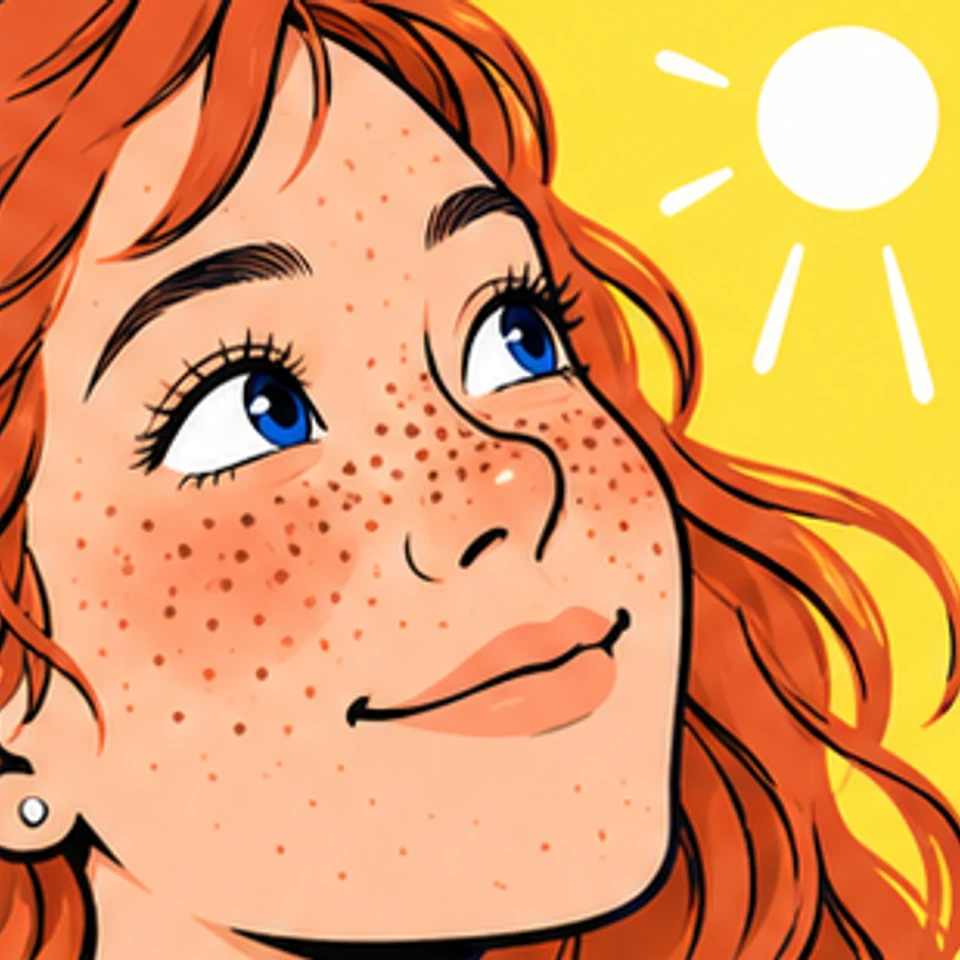
Freckles are small, flat pigment spots that can darken in sunlight. They often fade in winter, unlike many persistently visible age or sun spots. The tendency depends in part on an individual’s pigmentation.
Why does it happen?
More melanin is produced in the affected areas of skin, without requiring a mole made of clustered nevus cells. UV light stimulates pigment production; genetic variation also influences predisposition.
Frequency
Freckles are common, but their frequency varies substantially with pigmentation and predisposition. Sunlight primarily changes how visible they are.
Frequency is a qualitative description, not your individual probability.
Is it normal?
Symmetrical spots that have looked similar for years are usually harmless.
When to seek advice
A spot that markedly changes shape or color, bleeds spontaneously, or looks strikingly different from the others should be assessed by a dermatologist.
Does this happen to you?
Your answer is first saved only on this device.
How others answer
Loading results …
No shared answers yet.
Voluntary responses, not representative. One answer per saved browser key and article is counted. Multiple submissions are possible; people are not verified.
Sources (1)
- DermNet: Ephelis (opens a new tab)
Explains ephelides, pigmentation, and dependence on sunlight.
Editorial update: . AI-assisted research and editing; not individually reviewed by a physician. How we research