In a nutshell
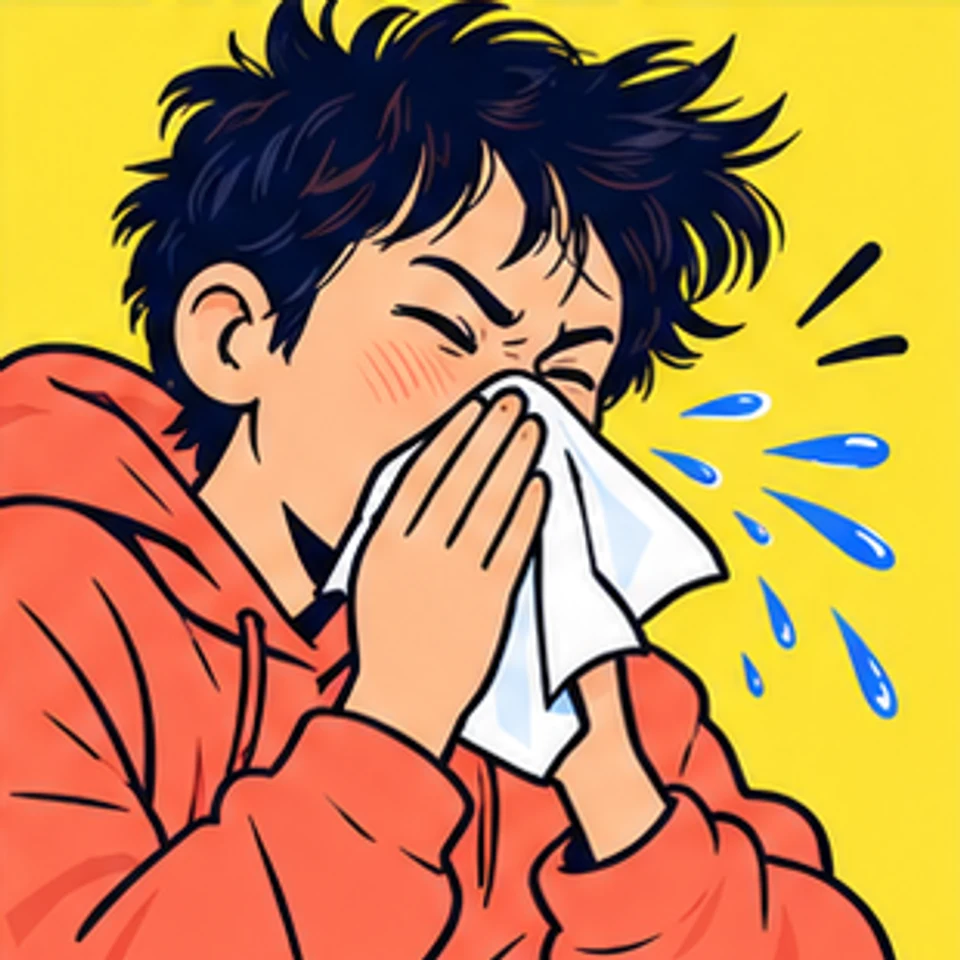
An irritated nose can trigger a sudden forceful burst of air. Sneezing helps remove material from the upper airways, but also occurs with allergies or infections.
Why does it happen?
Sensory nerve endings in the nasal mucosa report irritation through trigeminal pathways. Brainstem networks then coordinate the breathing muscles and upper airways. The exact circuitry is still being studied; detailed knowledge of individual signaling molecules comes partly from animal experiments.
Frequency
Sneezing is a normal, widespread airway reflex. How often it occurs depends on stimuli, infections, and any allergies.
Frequency is a qualitative description, not your individual probability.
Is it normal?
Occasional sneezing is normal.
When to seek advice
Prolonged bothersome sneezing fits can be assessed for allergy or nasal disease; shortness of breath or rapid swelling is urgent.
Does this happen to you?
Your answer is first saved only on this device.
How others answer
Loading results …
No shared answers yet.
Voluntary responses, not representative. One answer per saved browser key and article is counted. Multiple submissions are possible; people are not verified.
Sources (1)
- Sneezing reflex is mediated by a peptidergic pathway from nose to brainstem (opens a new tab)
Investigates a sensory connection from nasal mucosa to brainstem networks; detailed circuit evidence comes substantially from mouse experiments.
Editorial update: . AI-assisted research and editing; not individually reviewed by a physician. How we research