In a nutshell
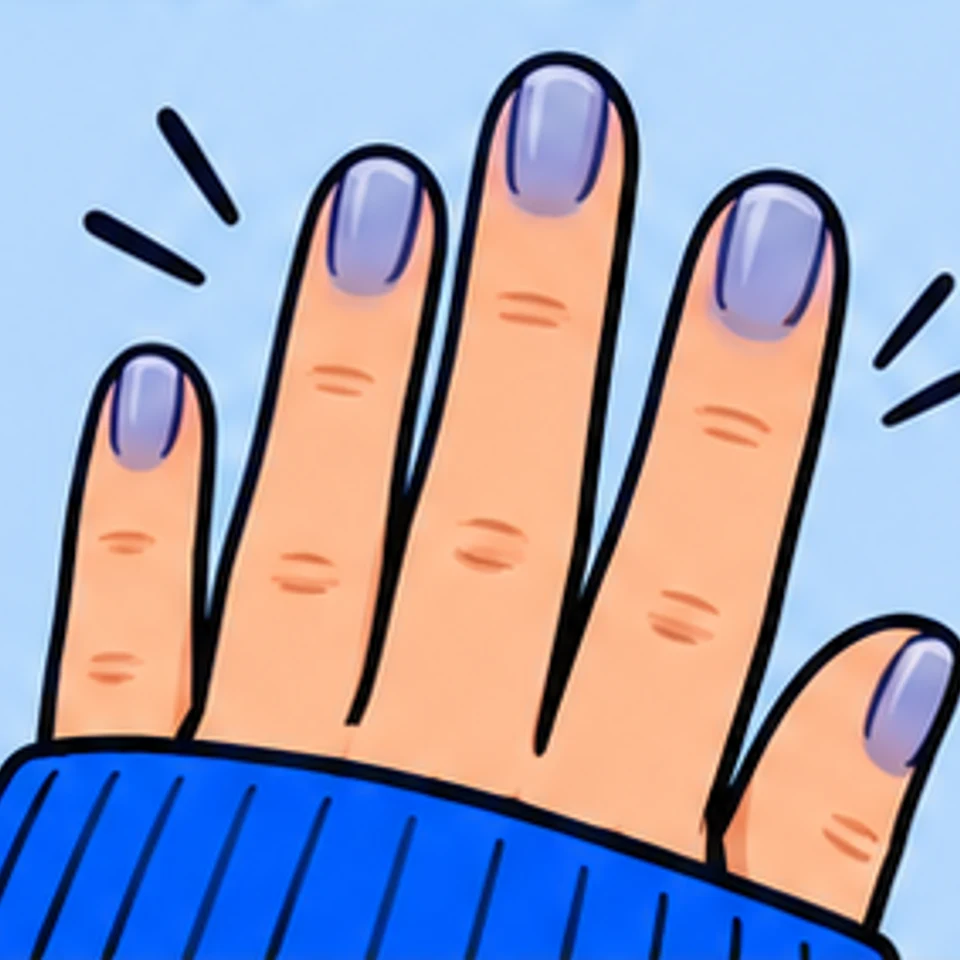
When the hands are cold, the nail beds may temporarily look bluish or gray. The color arises in the translucent tissue and does not mean that the nail plate itself has turned blue. Such a change should disappear with warming; color alone cannot measure the blood’s oxygen level.
Why does it happen?
When peripheral blood flow slows, tissue extracts more oxygen from the blood, leaving more deoxygenated hemoglobin locally. This must be distinguished from central causes, in which the lips or tongue may also turn bluish or gray.
Frequency
There is no reliable population estimate here for temporarily bluish nail beds in cold conditions. Whether they are visibly apparent depends on circulation, temperature, and skin color.
Frequency is a qualitative description, not your individual probability.
Is it normal?
A fully reversible color change that occurs only in the cold may have a peripheral cause; not every blue discoloration is harmless.
When to seek advice
If the lips or tongue suddenly turn blue or gray, or there is shortness of breath, chest pain, or drowsiness, call emergency services. Newly persistent discoloration of the fingers requires prompt medical assessment even without these signs.
Does this happen to you?
Your answer is first saved only on this device.
How others answer
Loading results …
No shared answers yet.
Voluntary responses, not representative. One answer per saved browser key and article is counted. Multiple submissions are possible; people are not verified.
Sources (1)
- NHS: Blue or grey skin or lips (cyanosis) (opens a new tab)
This source supports the description and physiological context of this entry.
Editorial update: . AI-assisted research and editing; not individually reviewed by a physician. How we research