In a nutshell
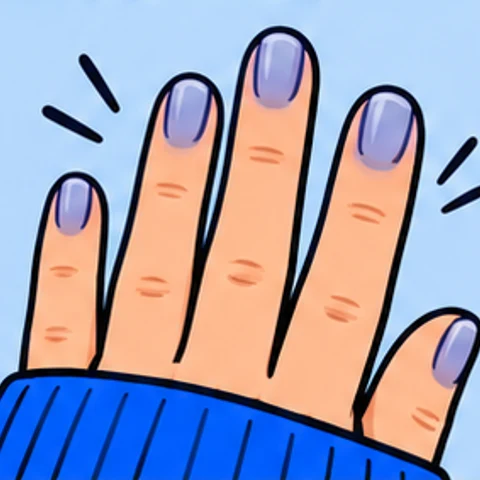
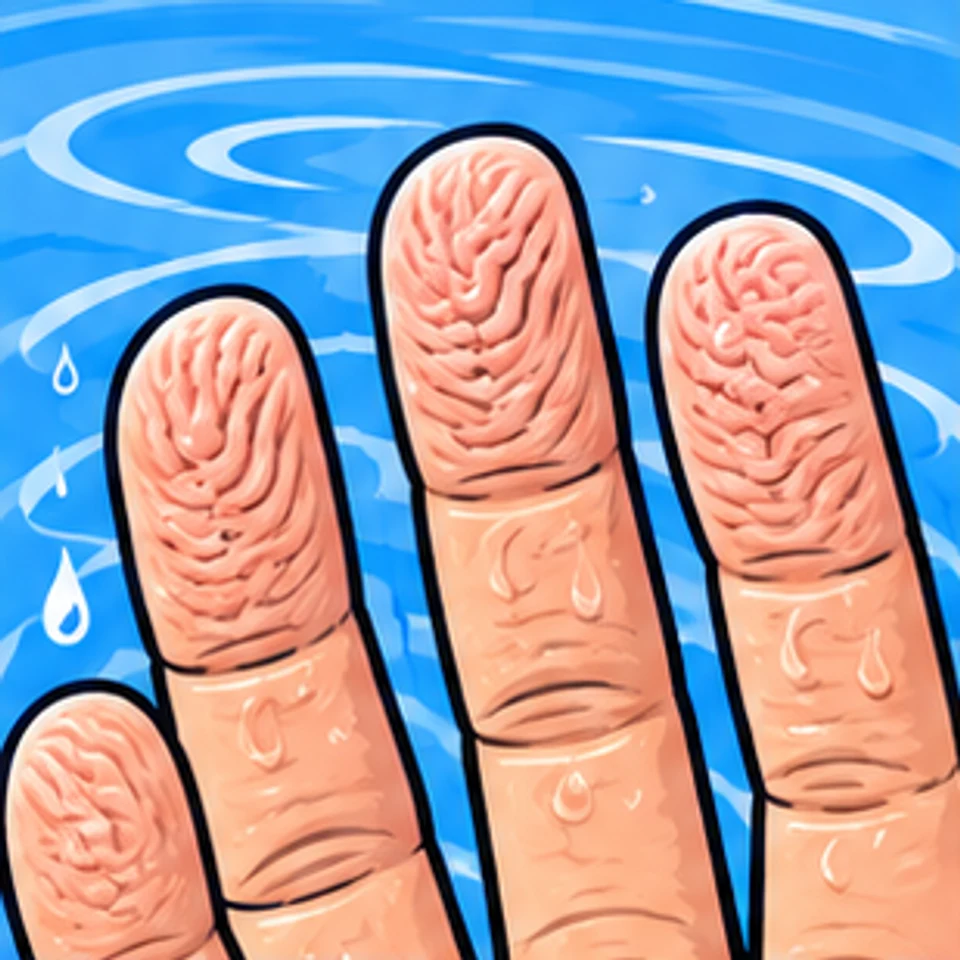
After prolonged water contact, wrinkles develop especially on the fingertips and toes. They disappear again after drying. Typical wrinkling depends on an active nerve and blood-vessel response; it is not merely a consequence of the skin absorbing water.
Why does it happen?
Sympathetic nerves constrict small blood vessels in the fingertips. The tissue beneath loses volume, so the skin above it folds into wrinkles; whether this evolutionarily improves wet grip remains unresolved.
Frequency
Typical wrinkling after prolonged water contact is a normal, widespread response. Its intensity and speed vary between people.
Frequency is a qualitative description, not your individual probability.
Is it normal?
Normal and reversible after drying.
When to seek advice
Have pain, marked one-sided wrinkling, or wrinkling without water assessed.
Does this happen to you?
Your answer is first saved only on this device.
How others answer
Loading results …
No shared answers yet.
Voluntary responses, not representative. One answer per saved browser key and article is counted. Multiple submissions are possible; people are not verified.
Sources (1)
- Wilder-Smith und Chow: Water-immersion wrinkling is due to vasoconstriction (opens a new tab)
Examines vasoconstriction as the cause of water-induced wrinkling.
Editorial update: . AI-assisted research and editing; not individually reviewed by a physician. How we research