In a nutshell
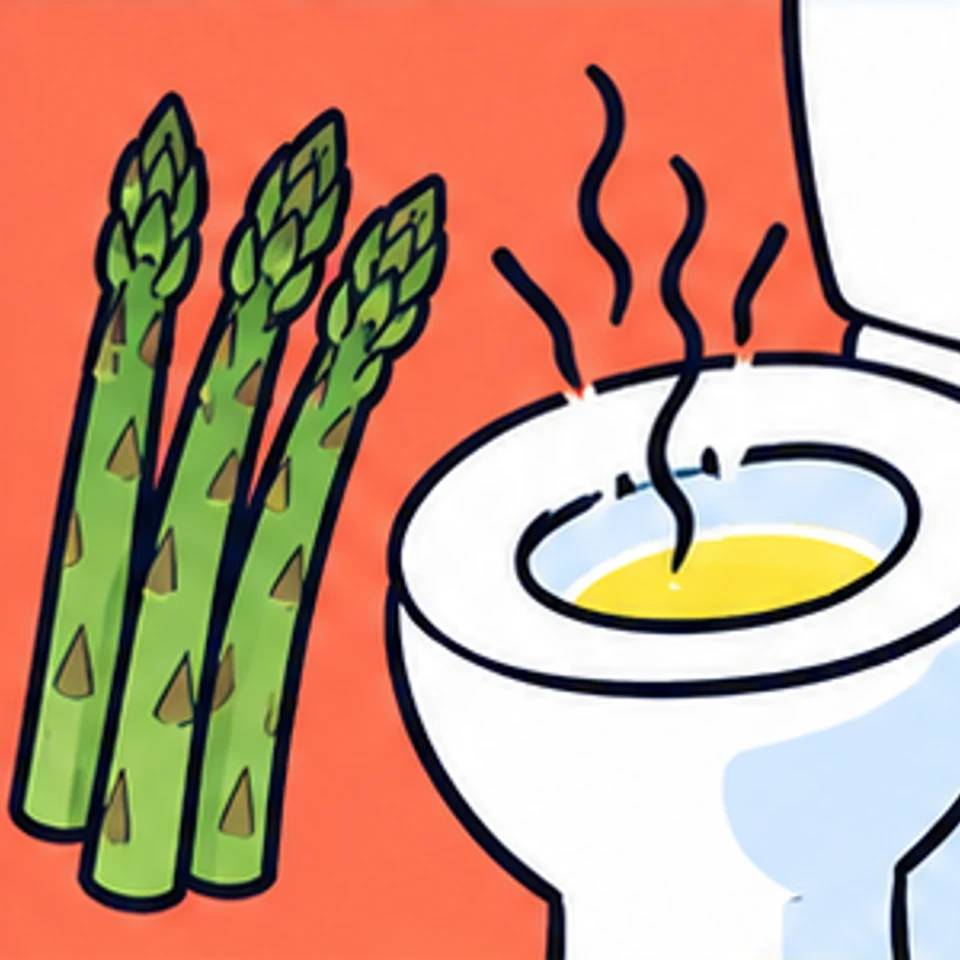
After eating asparagus, urine can smell noticeably sulfurous. People differ both in how much characteristic odor is produced and in how well they can perceive it.
Why does it happen?
Metabolism of asparagus components produces volatile sulfur-containing compounds. Some are excreted in urine. Differences in odor production and smell ability together determine whether the odor is noticed.
Frequency
Only some people notice a distinctive urine odor after asparagus. Odor production and the ability to perceive it are separate factors and result in different frequency estimates.
Frequency is a qualitative description, not your individual probability.
Is it normal?
Harmless for a short time after asparagus.
When to seek advice
Burning during urination, fever, blood in urine, or a persistent unusual odor unrelated to food should be assessed.
Does this happen to you?
Your answer is first saved only on this device.
How others answer
Loading results …
No shared answers yet.
Voluntary responses, not representative. One answer per saved browser key and article is counted. Multiple submissions are possible; people are not verified.
Sources (1)
- Ausscheidung und Wahrnehmung des charakteristischen Uringeruchs nach Spargel (opens a new tab)
The human study distinguishes odor production from the ability to perceive the odor.
Editorial update: . AI-assisted research and editing; not individually reviewed by a physician. How we research