In a nutshell
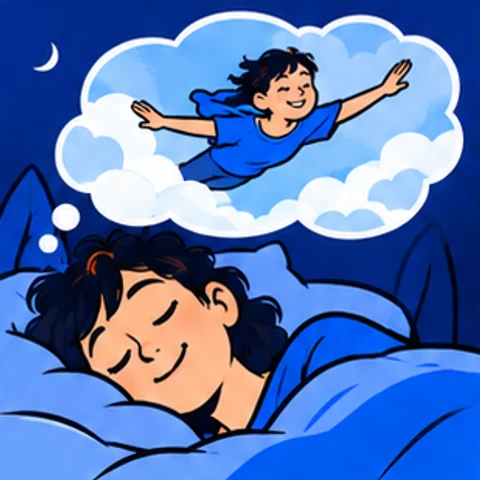
A person with aphantasia does not experience conscious mental pictures when intentionally trying to visualize. Knowledge of an object’s appearance, spatial thinking, or dreams can still be present.
Why does it happen?
Voluntary imagery requires several memory, attention, and visual networks to work together. In aphantasia, the subjective result of this processing differs without implying a complete absence of visual brain activity. Its neural basis is not yet fully understood and may differ between congenital and acquired cases.
Frequency
A minority of people report persistently absent or very weak voluntary visual imagery. Prevalence figures differ depending on the questionnaire and how complete absence is distinguished from weak imagery.
Frequency is a qualitative description, not your individual probability.
Observe it yourself
- Think of a red apple without looking at a picture.
- Describe to yourself whether an inner image forms or whether you mainly know its properties. This is an observation, not a diagnostic test.
Stop if uncomfortable. This is not a diagnostic test.
Is it normal?
Lifelong aphantasia is usually a harmless variation; imagery vividness exists on a spectrum.
When to seek advice
A sudden acquired loss of previously present imagery should be discussed with a clinician, especially if there are other new symptoms.
Does this happen to you?
Your answer is first saved only on this device.
How others answer
Loading results …
No shared answers yet.
Voluntary responses, not representative. One answer per saved browser key and article is counted. Multiple submissions are possible; people are not verified.
Sources (1)
- Lives without imagery – Congenital aphantasia (opens a new tab)
This source supports the description and physiological context of this entry.
Editorial update: . AI-assisted research and editing; not individually reviewed by a physician. How we research